Veda Skills Logical Reasoning Unit 18:
Figure Series, Counting and Cubes
Figure Series, Counting and Cubes is Unit 18 of
Veda Skills Logical Reasoning.
This page has the complete chapter notes across 3 topics, 183 practice MCQs with answers and explanations, 12 important short and long questions and 36 flashcards, written for SSC, Bank, Railway and placement exams and free to read.
3 topics
183 MCQs
9 short answers
3 long answers
36 flashcards
3 games
~125 min read
English
Checked before publishing: 23 automated checks, including a
plagiarism check against the textbook's own words.
How we check our content
Figure Series and Analogy
Find the next figure in a series by tracking each element separately, solve figure analogies by finding the change from the first figure to the second, and pick the odd figure out.
What you will be able to do
I can split a figure series into separate elements and find the rule of each.
I can count steps around a frame and turns of an arrow in 45° units.
I can find the change from figure 1 to figure 2 and apply it to figure 3.
I can tell a turned copy from a mirror image to find the odd figure.
Key points
Never look at a series figure as a whole. Follow one element at a time across all the figures.
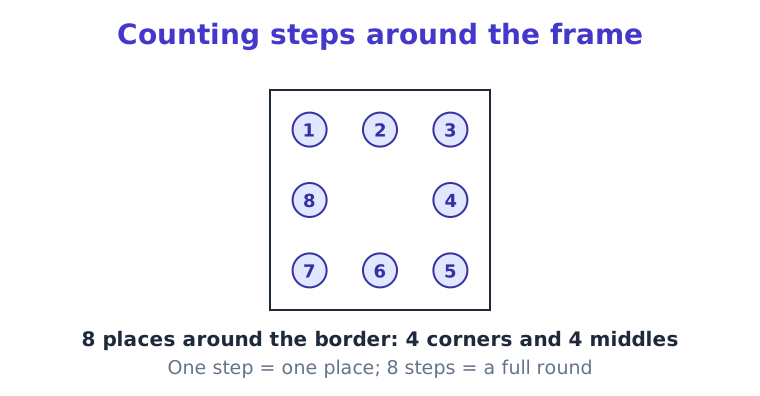
Number the 8 places around a square frame (4 corners, 4 middles). A move of one place is one step; 8 steps make a full round.
An arrow turning by one place turns 45°; two places is 90°.
Write the step between each pair of figures. Equal steps: keep adding. Steps 1, 2, 3: add one more each time.
Distractors usually move one element the wrong way or by one step too many or too few. Check every element of your answer.
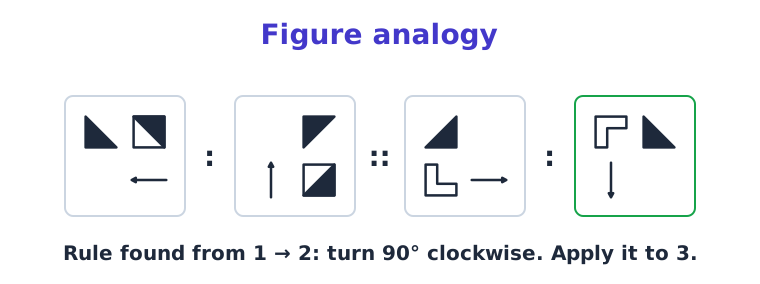
In an analogy, name the change from figure 1 to figure 2 exactly (which flip or which turn), then apply only that change to figure 3.
A turn never produces a mirror image. In "odd one out", the figure that cannot be turned to match the others is the answer.
A 90° clockwise turn and a 90° anticlockwise turn are different; a 180° turn is the same both ways.
Full explanation
Riya and the strange boxes
Riya opens her first SSC mock paper and finds a row of boxes with dots and arrows jumping around. "There is no number to calculate," she thinks. "How do I even start?"
By the end of this topic she will solve such questions in under 40 seconds.
Break the figure into elements
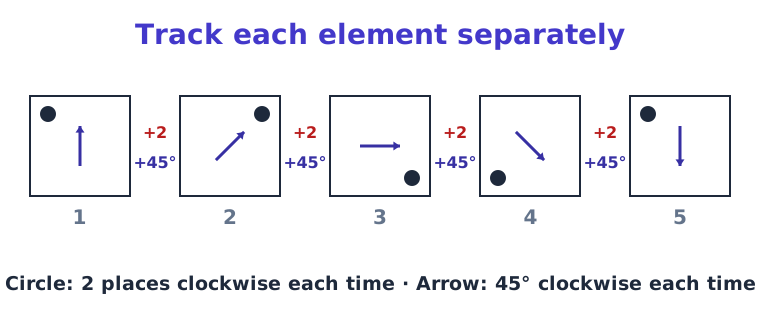
Each figure in a series is made of a few elements: a symbol that moves, an arrow that turns, a shape that gains sides. Each element follows its own rule. Solve them one at a time and put the answers together.
Counting places around the frame
A square frame has 8 places on its border. Moving to the next place is one step. Always note the direction too: clockwise or anticlockwise.
A worked series
Below, the black circle moves 2 places clockwise each time and the arrow turns 45° clockwise each time. Figure 5 follows from both rules together.
Steps that grow
Sometimes the steps are 1, 2, 3, 4: the element moves one place more each time. Write the steps between figures; if they grow by one, the next step is one more than the last.
Figure analogy
In 1 : 2 :: 3 : ?, find exactly how figure 2 was made from figure 1: a flip (left-right or top-bottom), a turn (90° which way, or 180°), or black and white swapped. Then do exactly that to figure 3.
Odd one out
When three figures are the same figure turned round, the fourth is usually its mirror image. A turn can never produce a mirror image, so the odd figure is the one you cannot turn to match.
Exam shortcuts
One element at a time; write its step.
One place = 45°.
Check the direction before the amount.
Eliminate options: one wrong element rejects an option.
Analogy: name the change exactly.
Odd one out: look for the mirror image.
Back to Riya
Riya tries the boxes again. "Circle: two steps clockwise. Arrow: 90° anticlockwise." She crosses out two options in seconds and finds the answer. "It is just counting," she smiles.
Mind map
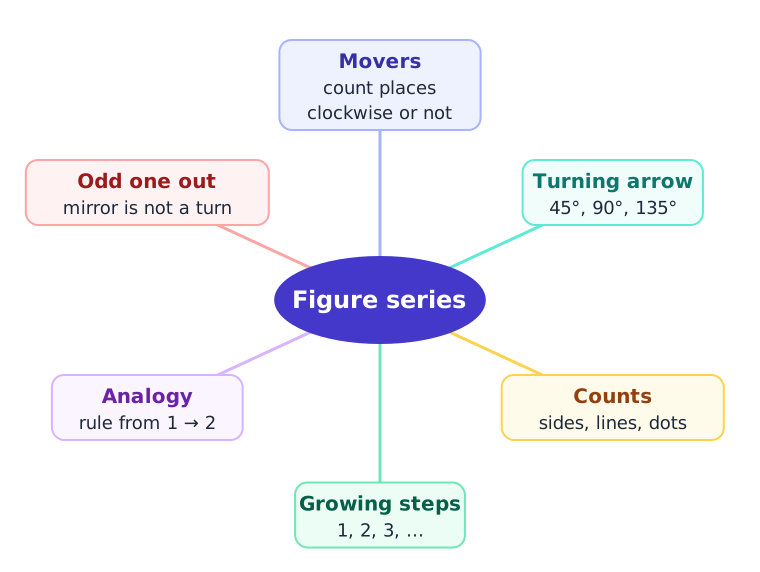
The whole topic on one page.
Concepts and terms
Element
One part of a figure (a symbol, an arrow, a line) that changes by its own rule across the series.
Step around a frame
Moving from one of the 8 border places to the next. Clockwise is the direction a clock's hands move.
Figure analogy
A : B :: C : ? means B is made from A by some change; make the same change to C.
Rotation vs reflection
Turning keeps a figure the same "handedness"; a mirror flip reverses it. No turn can undo a flip.
Did you know
Raven's Progressive Matrices, a famous non-verbal test, is built entirely from figure series rules like these.
SSC and railway papers usually have 2 to 5 non-verbal questions, and they are among the fastest to solve once you know the method.
Memory tricks
Series method — One part, all frames — Follow one element through every frame before looking at the next element.
Arrow turns — One place = 45° — Eight places make 360°, so each place is 45°.
Practice MCQs with answers (60)
Q1
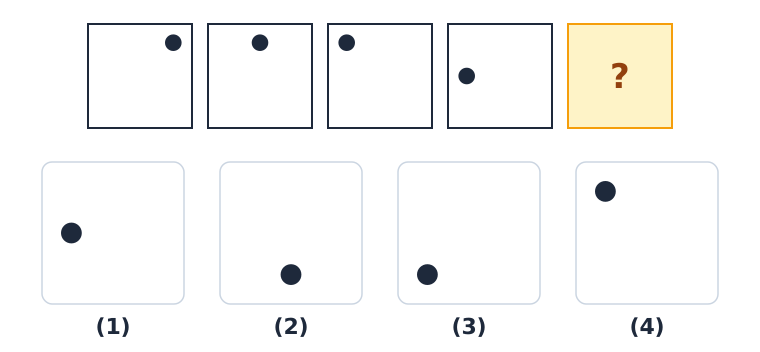
The four figures follow a rule. Which answer figure comes next in the series?
beginner
A1
B2
C3
D4
Show answer
Answer: 3
Why:
Track each element on its own. The black circle moves 1 place anticlockwise each time. So the fifth figure has the black circle at the bottom-left corner: figure (3). The other figures make one element move the wrong way or by the wrong amount.
Q2
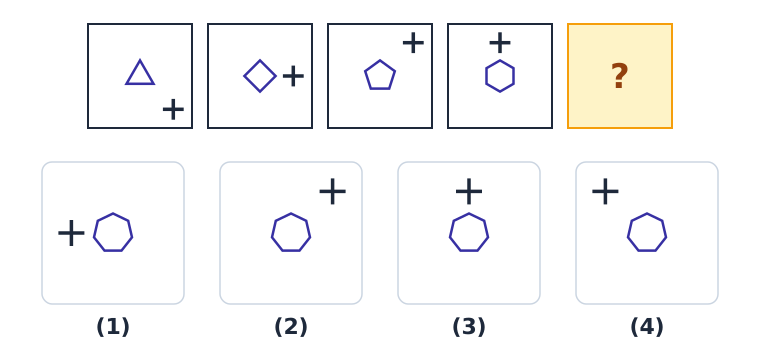
The four figures follow a rule. Which answer figure comes next in the series?
beginner
A1
B2
C3
D4
Show answer
Answer: 4
Why:
Track each element on its own. The plus sign moves 1 place anticlockwise each time. The centre shape gains one side each time. So the fifth figure has the plus sign at the top-left corner, a heptagon (7 sides) in the centre: figure (4). The other figures make one element move the wrong way or by the wrong amount.
Q3
The four figures follow a rule. Which answer figure comes next in the series?
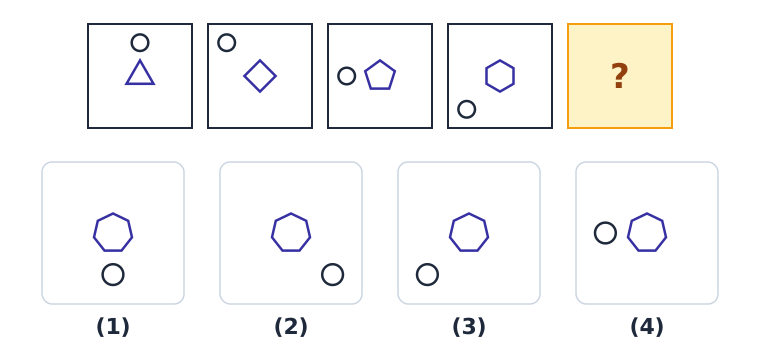
beginner
A1
B2
C3
D4
Show answer
Answer: 1
Why:
Track each element on its own. The white circle moves 1 place anticlockwise each time. The centre shape gains one side each time. So the fifth figure has the white circle at the bottom middle, a heptagon (7 sides) in the centre: figure (1). The other figures make one element move the wrong way or by the wrong amount.
Q4
The four figures follow a rule. Which answer figure comes next in the series?
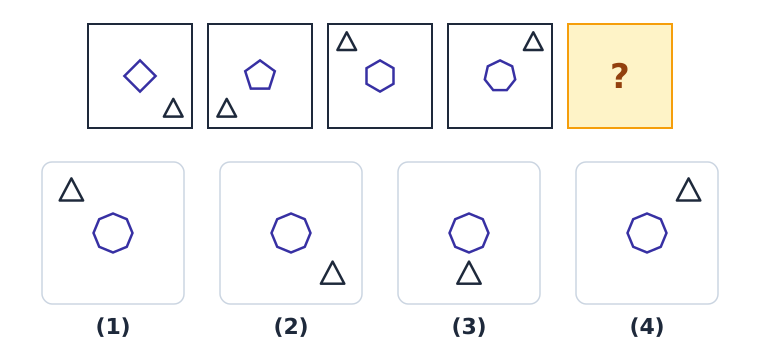
beginner
A1
B2
C3
D4
Show answer
Answer: 2
Why:
Track each element on its own. The triangle moves 2 places clockwise each time. The centre shape gains one side each time. So the fifth figure has the triangle at the bottom-right corner, a octagon (8 sides) in the centre: figure (2). The other figures make one element move the wrong way or by the wrong amount.
Q5
The four figures follow a rule. Which answer figure comes next in the series?
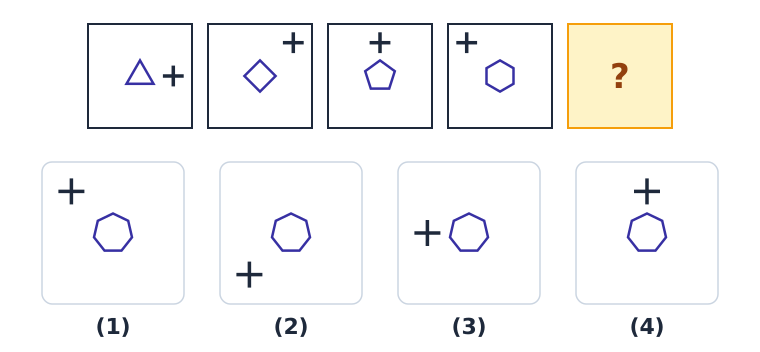
beginner
A1
B2
C3
D4
Show answer
Answer: 3
Why:
Track each element on its own. The plus sign moves 1 place anticlockwise each time. The centre shape gains one side each time. So the fifth figure has the plus sign at the left middle, a heptagon (7 sides) in the centre: figure (3). The other figures make one element move the wrong way or by the wrong amount.
Q6
The four figures follow a rule. Which answer figure comes next in the series?
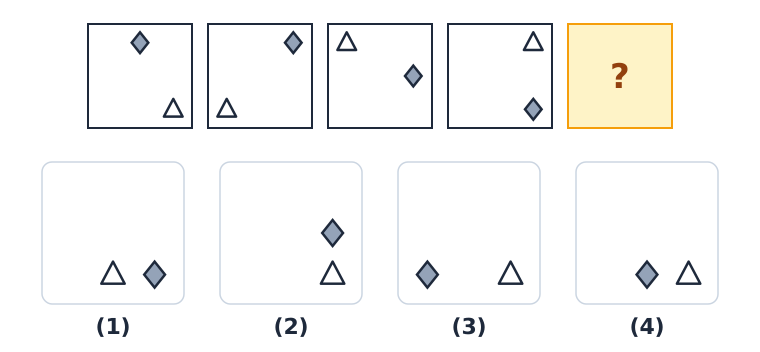
intermediate
A1
B2
C3
D4
Show answer
Answer: 4
Why:
Track each element on its own. The grey diamond moves 1 place clockwise each time. The triangle moves 2 places clockwise each time. So the fifth figure has the grey diamond at the bottom middle, triangle at the bottom-right corner: figure (4). The other figures make one element move the wrong way or by the wrong amount.
Q7
The four figures follow a rule. Which answer figure comes next in the series?
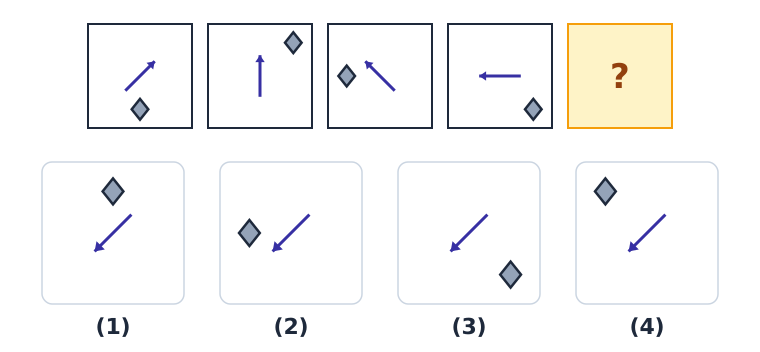
intermediate
A1
B2
C3
D4
Show answer
Answer: 1
Why:
Track each element on its own. The grey diamond moves 3 places anticlockwise each time. The arrow turns 45° anticlockwise each time. So the fifth figure has the grey diamond at the top middle, centre arrow pointing down-left: figure (1). The other figures make one element move the wrong way or by the wrong amount.
Q8
The four figures follow a rule. Which answer figure comes next in the series?
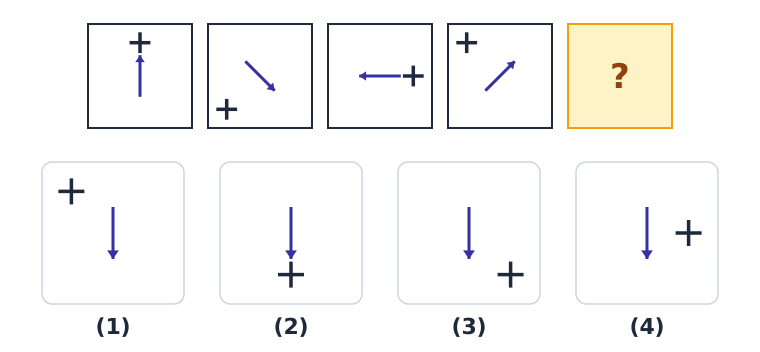
intermediate
A1
B2
C3
D4
Show answer
Answer: 2
Why:
Track each element on its own. The plus sign moves 3 places anticlockwise each time. The arrow turns 135° clockwise each time. So the fifth figure has the plus sign at the bottom middle, centre arrow pointing down: figure (2). The other figures make one element move the wrong way or by the wrong amount.
Q9
The four figures follow a rule. Which answer figure comes next in the series?
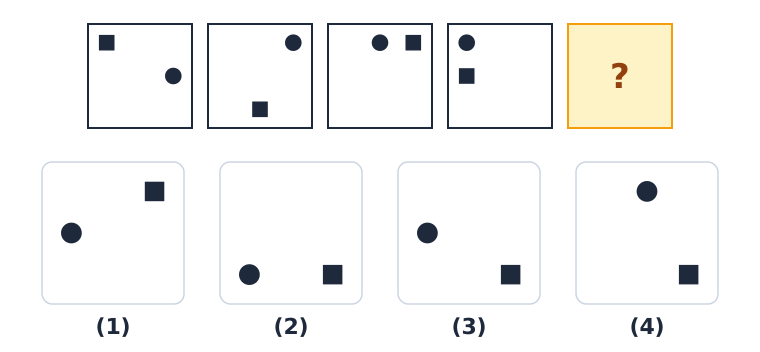
intermediate
A1
B2
C3
D4
Show answer
Answer: 3
Why:
Track each element on its own. The black circle moves 1 place anticlockwise each time. The black square moves 3 places anticlockwise each time. So the fifth figure has the black circle at the left middle, black square at the bottom-right corner: figure (3). The other figures make one element move the wrong way or by the wrong amount.
Q10
The four figures follow a rule. Which answer figure comes next in the series?
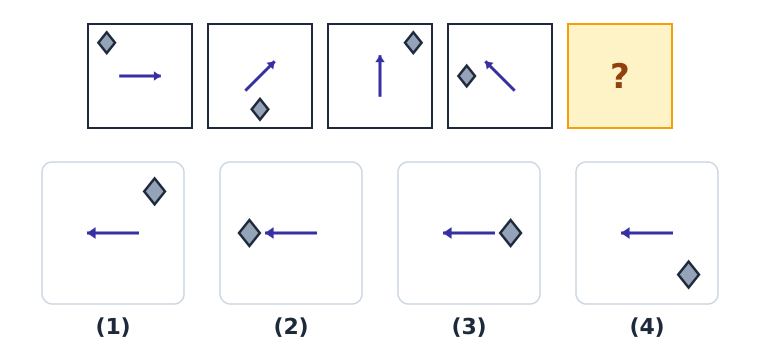
intermediate
A1
B2
C3
D4
Show answer
Answer: 4
Why:
Track each element on its own. The grey diamond moves 3 places anticlockwise each time. The arrow turns 45° anticlockwise each time. So the fifth figure has the grey diamond at the bottom-right corner, centre arrow pointing left: figure (4). The other figures make one element move the wrong way or by the wrong amount.
Q11
The four figures follow a rule. Which answer figure comes next in the series?
intermediate
A1
B2
C3
D4
Show answer
Answer: 1
Why:
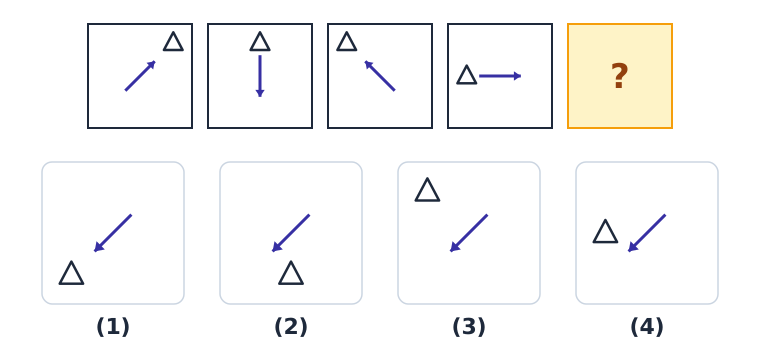
Track each element on its own. The triangle moves 1 place anticlockwise each time. The arrow turns 135° clockwise each time. So the fifth figure has the triangle at the bottom-left corner, centre arrow pointing down-left: figure (1). The other figures make one element move the wrong way or by the wrong amount.
Q12
The four figures follow a rule. Which answer figure comes next in the series?
intermediate
A1
B2
C3
D4
Show answer
Answer: 2
Why:
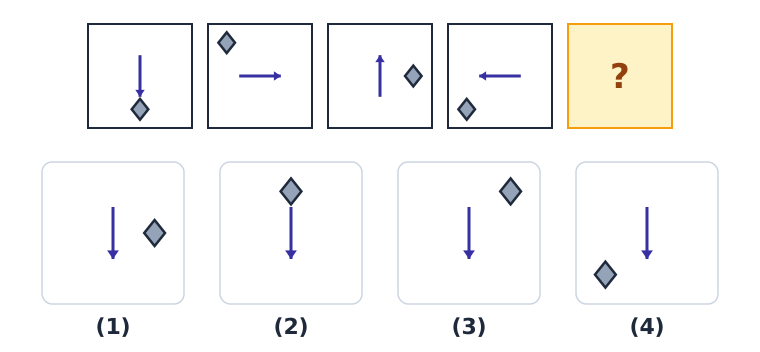
Track each element on its own. The grey diamond moves 3 places clockwise each time. The arrow turns 90° anticlockwise each time. So the fifth figure has the grey diamond at the top middle, centre arrow pointing down: figure (2). The other figures make one element move the wrong way or by the wrong amount.
Q13
The four figures follow a rule. Which answer figure comes next in the series?
advanced
A1
B2
C3
D4
Show answer
Answer: 3
Why:
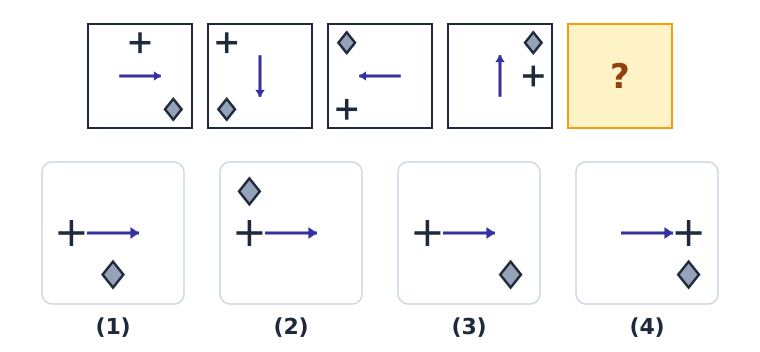
Track each element on its own. The plus sign moves 1 place, then 2 places, then 3 places anticlockwise (one more step each time). The grey diamond moves 2 places clockwise each time. The arrow turns 90° clockwise each time. So the fifth figure has the grey diamond at the bottom-right corner, plus sign at the left middle, centre arrow pointing right: figure (3). The other figures make one element move the wrong way or by the wrong amount.
Q14
The four figures follow a rule. Which answer figure comes next in the series?
advanced
A1
B2
C3
D4
Show answer
Answer: 4
Why:
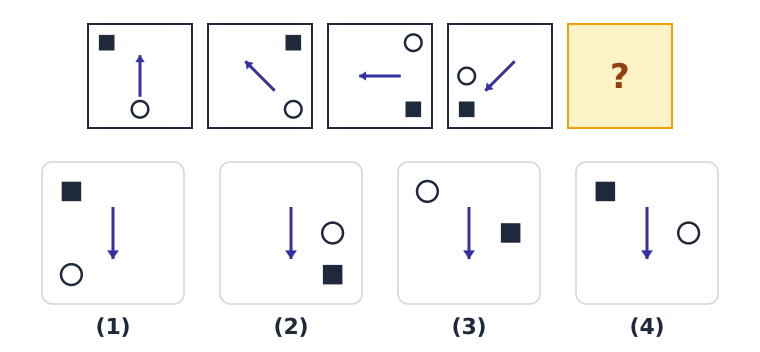
Track each element on its own. The white circle moves 1 place, then 2 places, then 3 places anticlockwise (one more step each time). The black square moves 2 places clockwise each time. The arrow turns 45° anticlockwise each time. So the fifth figure has the white circle at the right middle, black square at the top-left corner, centre arrow pointing down: figure (4). The other figures make one element move the wrong way or by the wrong amount.
Q15
The four figures follow a rule. Which answer figure comes next in the series?
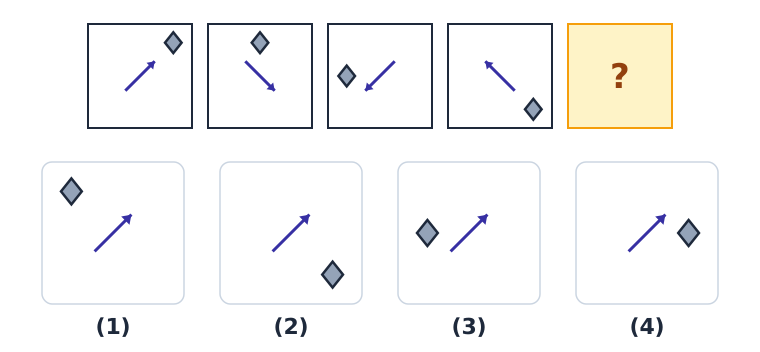
advanced
A1
B2
C3
D4
Show answer
Answer: 1
Why:
Track each element on its own. The grey diamond moves 1 place, then 2 places, then 3 places anticlockwise (one more step each time). The arrow turns 90° clockwise each time. So the fifth figure has the grey diamond at the top-left corner, centre arrow pointing up-right: figure (1). The other figures make one element move the wrong way or by the wrong amount.
Q16
The four figures follow a rule. Which answer figure comes next in the series?
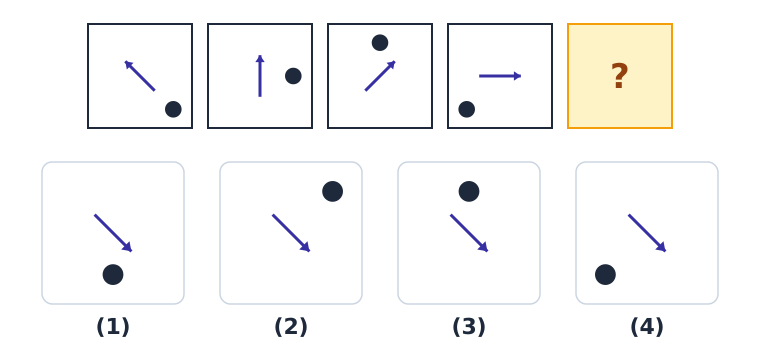
advanced
A1
B2
C3
D4
Show answer
Answer: 2
Why:
Track each element on its own. The black circle moves 1 place, then 2 places, then 3 places anticlockwise (one more step each time). The arrow turns 45° clockwise each time. So the fifth figure has the black circle at the top-right corner, centre arrow pointing down-right: figure (2). The other figures make one element move the wrong way or by the wrong amount.
Q17
The four figures follow a rule. Which answer figure comes next in the series?
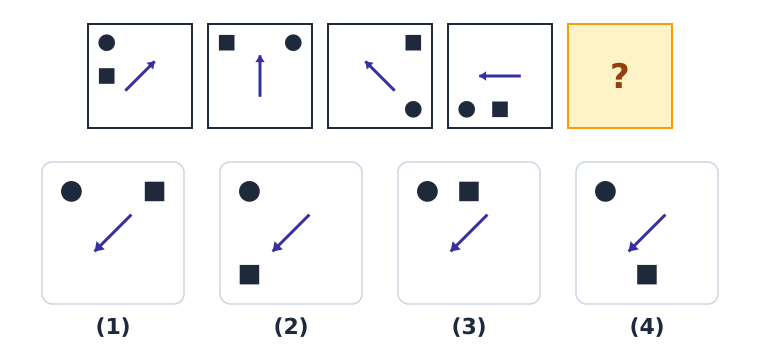
advanced
A1
B2
C3
D4
Show answer
Answer: 3
Why:
Track each element on its own. The black square moves 1 place, then 2 places, then 3 places clockwise (one more step each time). The black circle moves 2 places clockwise each time. The arrow turns 45° anticlockwise each time. So the fifth figure has the black circle at the top-left corner, black square at the top middle, centre arrow pointing down-left: figure (3). The other figures make one element move the wrong way or by the wrong amount.
Q18
The four figures follow a rule. Which answer figure comes next in the series?
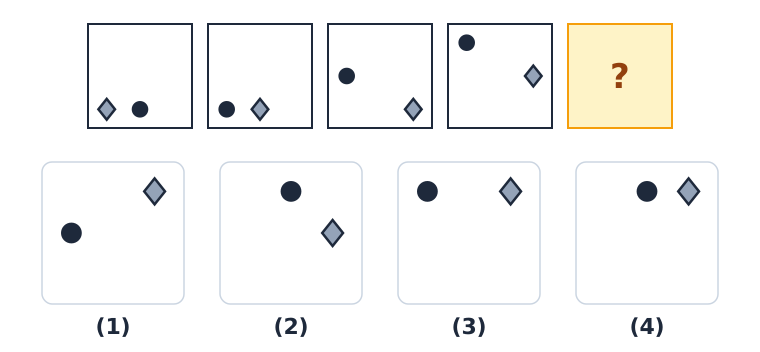
intermediate
A1
B2
C3
D4
Show answer
Answer: 4
Why:
Track each element on its own. The grey diamond moves 1 place anticlockwise each time. The black circle moves 1 place clockwise each time. So the fifth figure has the grey diamond at the top-right corner, black circle at the top middle: figure (4). The other figures make one element move the wrong way or by the wrong amount.
Q19
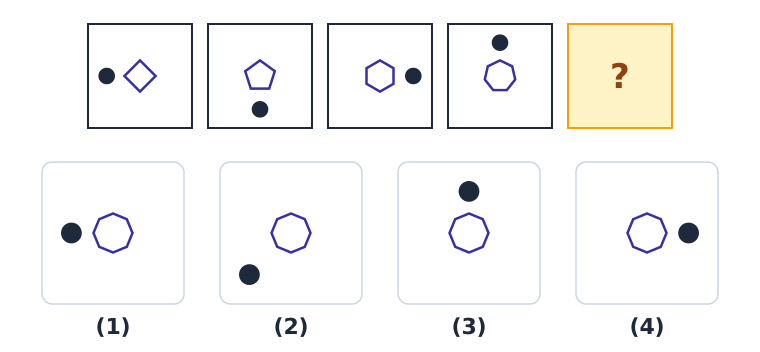
The four figures follow a rule. Which answer figure comes next in the series?
beginner
A1
B2
C3
D4
Show answer
Answer: 1
Why:
Track each element on its own. The black circle moves 2 places anticlockwise each time. The centre shape gains one side each time. So the fifth figure has the black circle at the left middle, a octagon (8 sides) in the centre: figure (1). The other figures make one element move the wrong way or by the wrong amount.
Q20
The four figures follow a rule. Which answer figure comes next in the series?
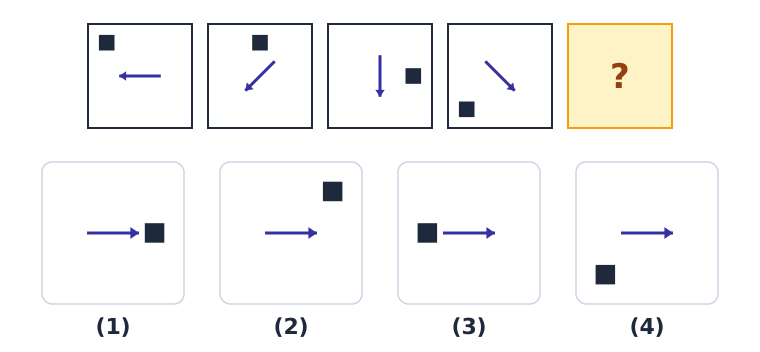
advanced
A1
B2
C3
D4
Show answer
Answer: 2
Why:
Track each element on its own. The black square moves 1 place, then 2 places, then 3 places clockwise (one more step each time). The arrow turns 45° anticlockwise each time. So the fifth figure has the black square at the top-right corner, centre arrow pointing right: figure (2). The other figures make one element move the wrong way or by the wrong amount.
Q21
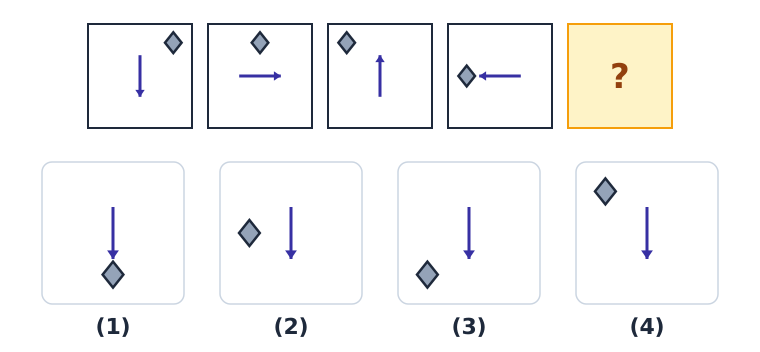
The four figures follow a rule. Which answer figure comes next in the series?
intermediate
A1
B2
C3
D4
Show answer
Answer: 3
Why:
Track each element on its own. The grey diamond moves 1 place anticlockwise each time. The arrow turns 90° anticlockwise each time. So the fifth figure has the grey diamond at the bottom-left corner, centre arrow pointing down: figure (3). The other figures make one element move the wrong way or by the wrong amount.
Q22
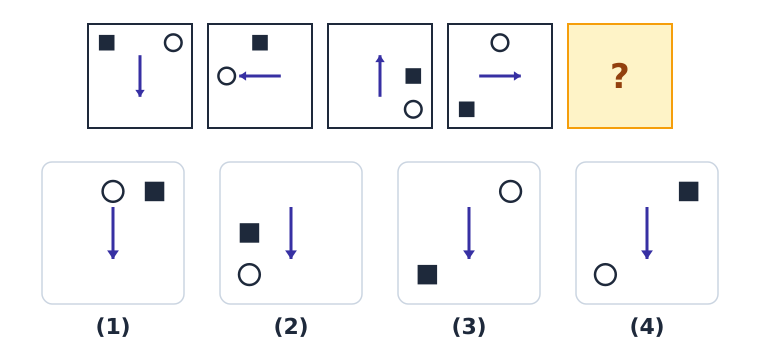
The four figures follow a rule. Which answer figure comes next in the series?
advanced
A1
B2
C3
D4
Show answer
Answer: 4
Why:
Track each element on its own. The black square moves 1 place, then 2 places, then 3 places clockwise (one more step each time). The white circle moves 3 places anticlockwise each time. The arrow turns 90° clockwise each time. So the fifth figure has the white circle at the bottom-left corner, black square at the top-right corner, centre arrow pointing down: figure (4). The other figures make one element move the wrong way or by the wrong amount.
Q23
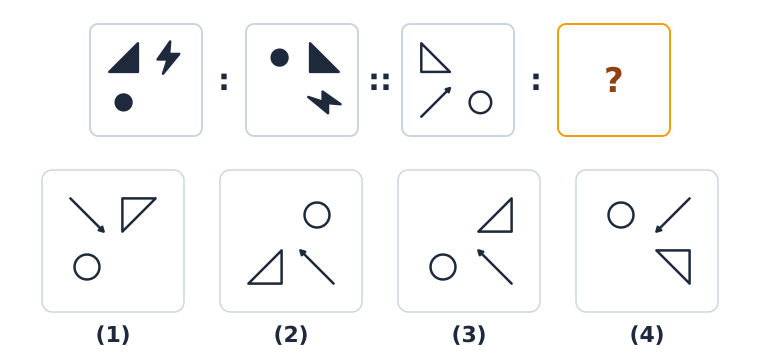
Figure 1 is related to figure 2 in a certain way. Which answer figure is related to figure 3 in the same way?
beginner
A1
B2
C3
D4
Show answer
Answer: 1
Why:
Figure 2 is figure 1 turned 90° clockwise. Do the same to figure 3 and you get figure (1). The other options apply a different change, such as the opposite turn or the other flip.
Q24
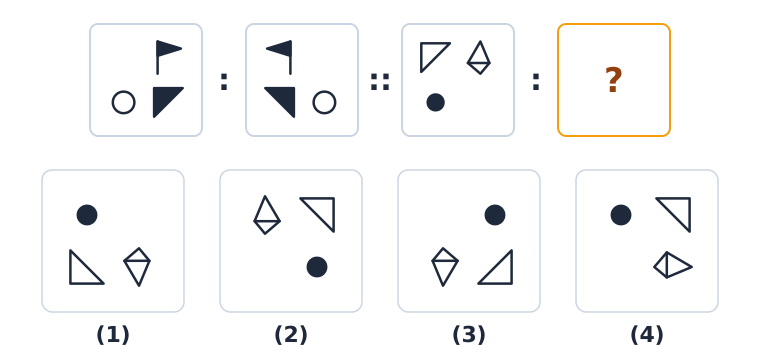
Figure 1 is related to figure 2 in a certain way. Which answer figure is related to figure 3 in the same way?
beginner
A1
B2
C3
D4
Show answer
Answer: 2
Why:
Figure 2 is figure 1 flipped left to right. Do the same to figure 3 and you get figure (2). The other options apply a different change, such as the opposite turn or the other flip.
Q25
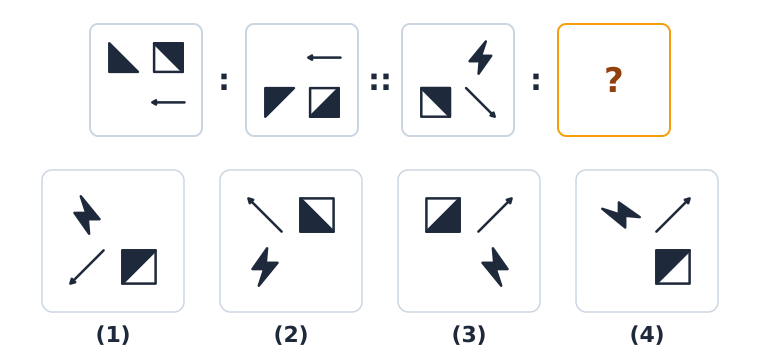
Figure 1 is related to figure 2 in a certain way. Which answer figure is related to figure 3 in the same way?
beginner
A1
B2
C3
D4
Show answer
Answer: 3
Why:
Figure 2 is figure 1 flipped top to bottom. Do the same to figure 3 and you get figure (3). The other options apply a different change, such as the opposite turn or the other flip.
Q26
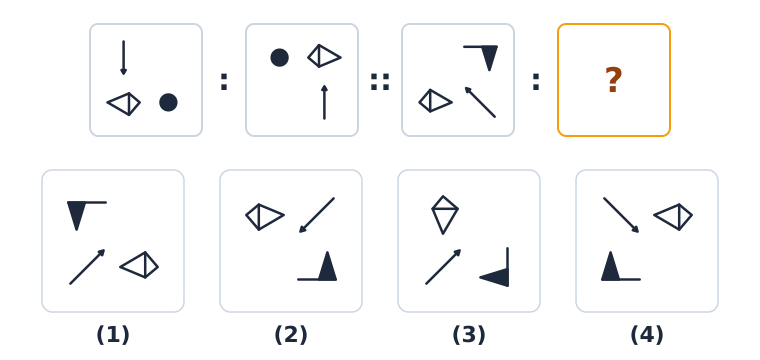
Figure 1 is related to figure 2 in a certain way. Which answer figure is related to figure 3 in the same way?
intermediate
A1
B2
C3
D4
Show answer
Answer: 4
Why:
Figure 2 is figure 1 turned through 180°. Do the same to figure 3 and you get figure (4). The other options apply a different change, such as the opposite turn or the other flip.
Q27
Figure 1 is related to figure 2 in a certain way. Which answer figure is related to figure 3 in the same way?
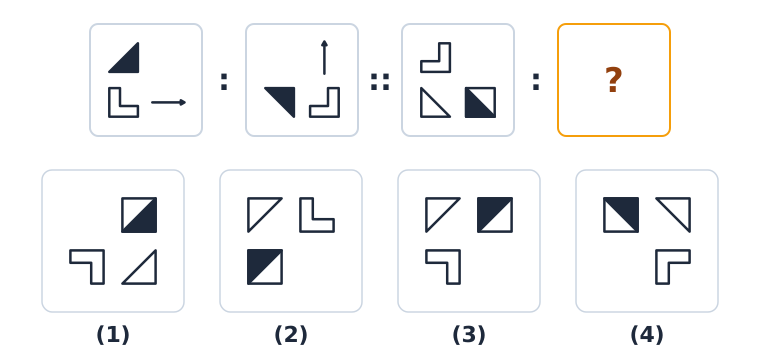
intermediate
A1
B2
C3
D4
Show answer
Answer: 1
Why:
Figure 2 is figure 1 turned 90° anticlockwise. Do the same to figure 3 and you get figure (1). The other options apply a different change, such as the opposite turn or the other flip.
Q28
Figure 1 is related to figure 2 in a certain way. Which answer figure is related to figure 3 in the same way?
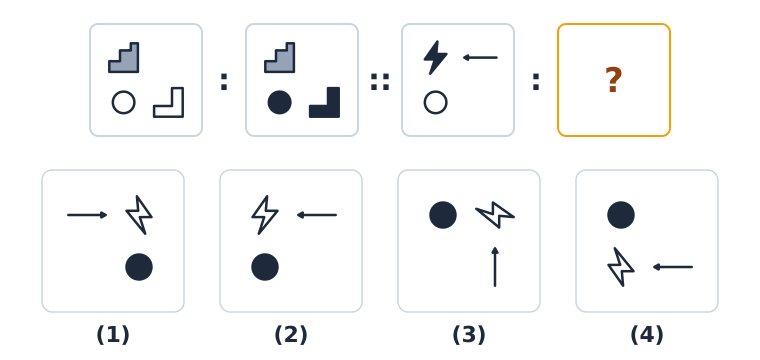
beginner
A1
B2
C3
D4
Show answer
Answer: 2
Why:
Figure 2 is figure 1 with black and white parts swapped. Do the same to figure 3 and you get figure (2). The other options apply a different change, such as the opposite turn or the other flip.
Q29
Figure 1 is related to figure 2 in a certain way. Which answer figure is related to figure 3 in the same way?
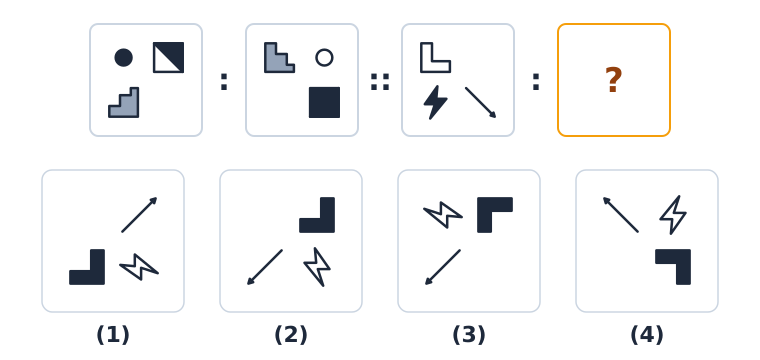
advanced
A1
B2
C3
D4
Show answer
Answer: 3
Why:
Figure 2 is figure 1 turned 90° clockwise, with black and white parts swapped. Do the same to figure 3 and you get figure (3). The other options apply a different change, such as the opposite turn or the other flip.
Q30
Figure 1 is related to figure 2 in a certain way. Which answer figure is related to figure 3 in the same way?
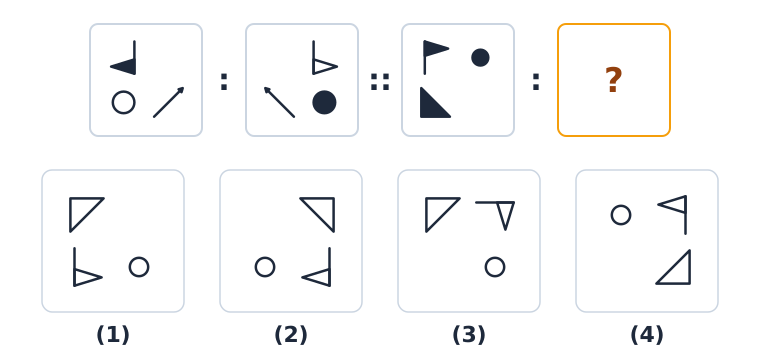
advanced
A1
B2
C3
D4
Show answer
Answer: 4
Why:
Figure 2 is figure 1 flipped left to right, with black and white parts swapped. Do the same to figure 3 and you get figure (4). The other options apply a different change, such as the opposite turn or the other flip.
Q31
Figure 1 is related to figure 2 in a certain way. Which answer figure is related to figure 3 in the same way?
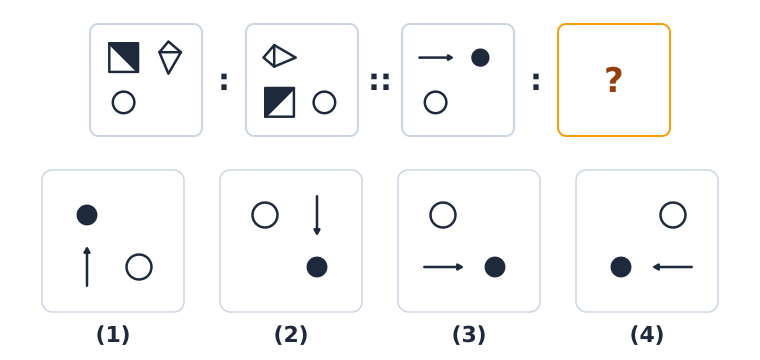
intermediate
A1
B2
C3
D4
Show answer
Answer: 1
Why:
Figure 2 is figure 1 turned 90° anticlockwise. Do the same to figure 3 and you get figure (1). The other options apply a different change, such as the opposite turn or the other flip.
Q32
Figure 1 is related to figure 2 in a certain way. Which answer figure is related to figure 3 in the same way?
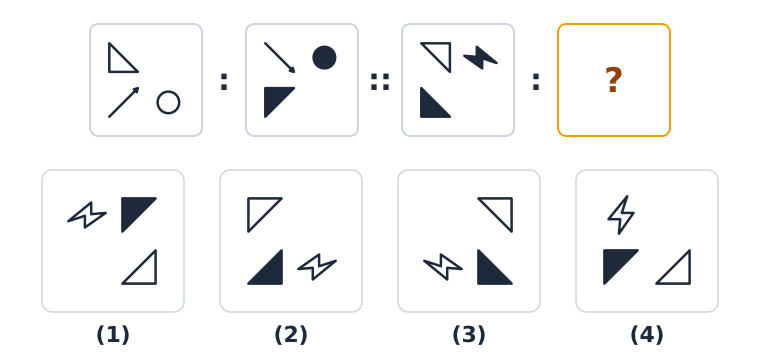
advanced
A1
B2
C3
D4
Show answer
Answer: 2
Why:
Figure 2 is figure 1 flipped top to bottom, with black and white parts swapped. Do the same to figure 3 and you get figure (2). The other options apply a different change, such as the opposite turn or the other flip.
Q33
Figure 1 is related to figure 2 in a certain way. Which answer figure is related to figure 3 in the same way?
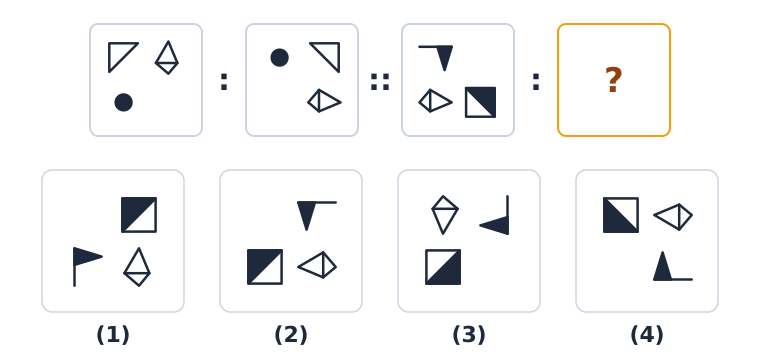
intermediate
A1
B2
C3
D4
Show answer
Answer: 3
Why:
Figure 2 is figure 1 turned 90° clockwise. Do the same to figure 3 and you get figure (3). The other options apply a different change, such as the opposite turn or the other flip.
Q34
Figure 1 is related to figure 2 in a certain way. Which answer figure is related to figure 3 in the same way?
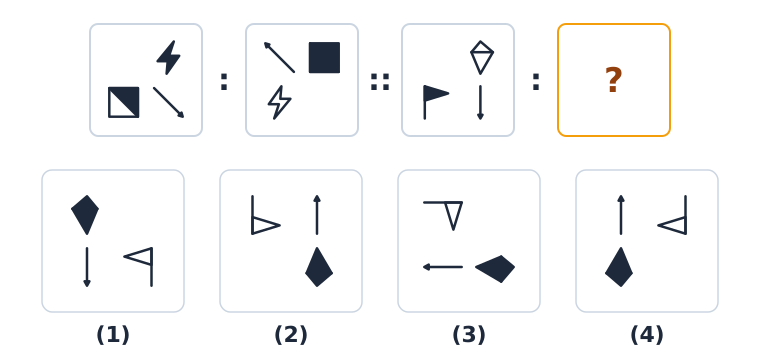
advanced
A1
B2
C3
D4
Show answer
Answer: 4
Why:
Figure 2 is figure 1 turned through 180°, with black and white parts swapped. Do the same to figure 3 and you get figure (4). The other options apply a different change, such as the opposite turn or the other flip.
Q35
Figure 1 is related to figure 2 in a certain way. Which answer figure is related to figure 3 in the same way?
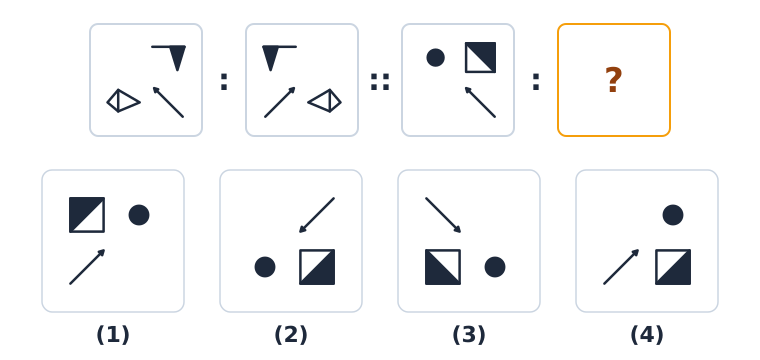
intermediate
A1
B2
C3
D4
Show answer
Answer: 1
Why:
Figure 2 is figure 1 flipped left to right. Do the same to figure 3 and you get figure (1). The other options apply a different change, such as the opposite turn or the other flip.
Q36
Figure 1 is related to figure 2 in a certain way. Which answer figure is related to figure 3 in the same way?
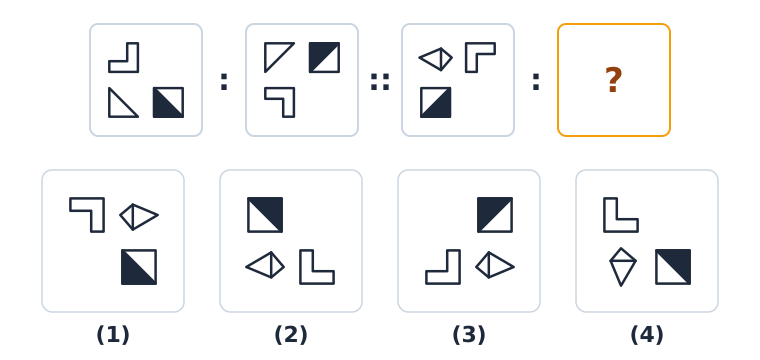
intermediate
A1
B2
C3
D4
Show answer
Answer: 2
Why:
Figure 2 is figure 1 flipped top to bottom. Do the same to figure 3 and you get figure (2). The other options apply a different change, such as the opposite turn or the other flip.
Q37
Figure 1 is related to figure 2 in a certain way. Which answer figure is related to figure 3 in the same way?
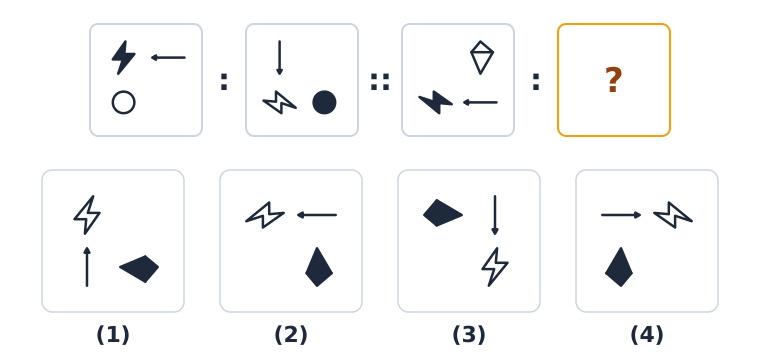
advanced
A1
B2
C3
D4
Show answer
Answer: 3
Why:
Figure 2 is figure 1 turned 90° anticlockwise, with black and white parts swapped. Do the same to figure 3 and you get figure (3). The other options apply a different change, such as the opposite turn or the other flip.
Q38
Figure 1 is related to figure 2 in a certain way. Which answer figure is related to figure 3 in the same way?
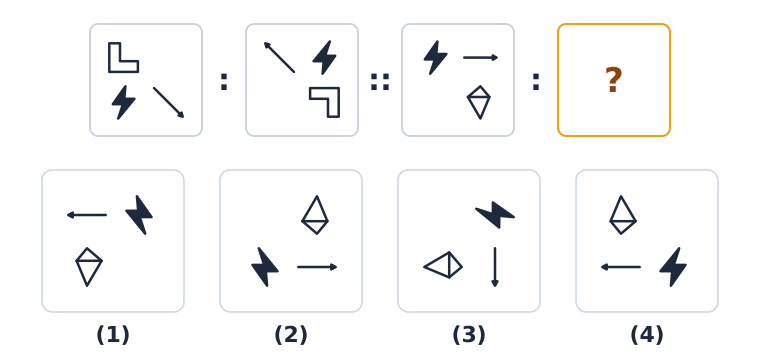
beginner
A1
B2
C3
D4
Show answer
Answer: 4
Why:
Figure 2 is figure 1 turned through 180°. Do the same to figure 3 and you get figure (4). The other options apply a different change, such as the opposite turn or the other flip.
Q39
Three of the four figures are the same figure turned round. Which figure is different from the others?
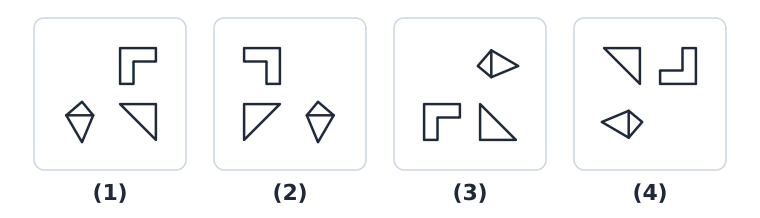
beginner
A1
B2
C3
D4
Show answer
Answer: 1
Why:
Turn the figures in your mind so that one part matches. Three of them then match exactly. Figure (1) never matches: it is a mirror image of the others, and no turn can make a mirror image.
Q40
Three of the four figures are the same figure turned round. Which figure is different from the others?
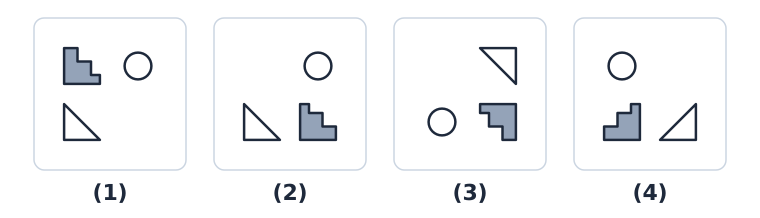
beginner
A1
B2
C3
D4
Show answer
Answer: 2
Why:
Turn the figures in your mind so that one part matches. Three of them then match exactly. Figure (2) never matches: it is a mirror image of the others, and no turn can make a mirror image.
Q41
Three of the four figures are the same figure turned round. Which figure is different from the others?
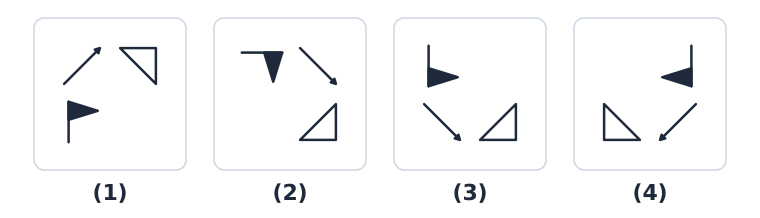
intermediate
A1
B2
C3
D4
Show answer
Answer: 3
Why:
Turn the figures in your mind so that one part matches. Three of them then match exactly. Figure (3) never matches: it is a mirror image of the others, and no turn can make a mirror image.
Q42
Three of the four figures are the same figure turned round. Which figure is different from the others?
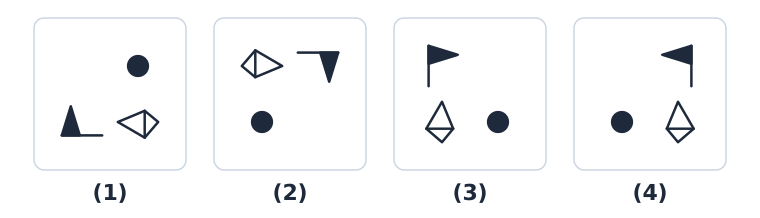
intermediate
A1
B2
C3
D4
Show answer
Answer: 4
Why:
Turn the figures in your mind so that one part matches. Three of them then match exactly. Figure (4) never matches: it is a mirror image of the others, and no turn can make a mirror image.
Q43
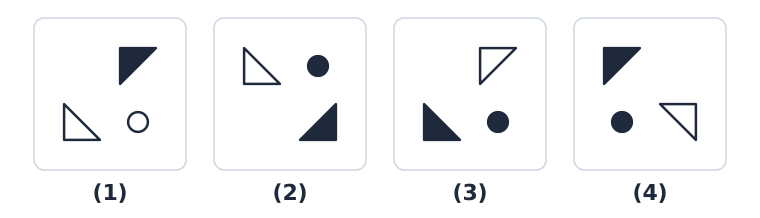
Three of the four figures are the same figure turned round. Which figure is different from the others?
advanced
A1
B2
C3
D4
Show answer
Answer: 1
Why:
Turn the figures in your mind so that one part matches. Three of them then match exactly. Figure (1) never matches: its black and white parts are swapped.
Q44
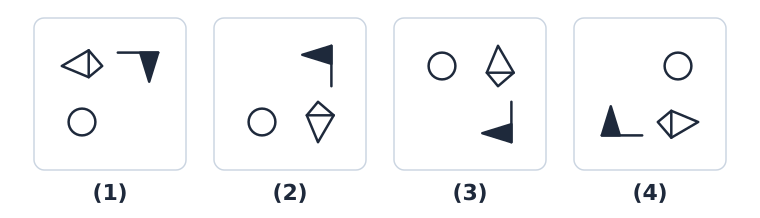
Three of the four figures are the same figure turned round. Which figure is different from the others?
intermediate
A1
B2
C3
D4
Show answer
Answer: 2
Why:
Turn the figures in your mind so that one part matches. Three of them then match exactly. Figure (2) never matches: it is a mirror image of the others, and no turn can make a mirror image.
Q45
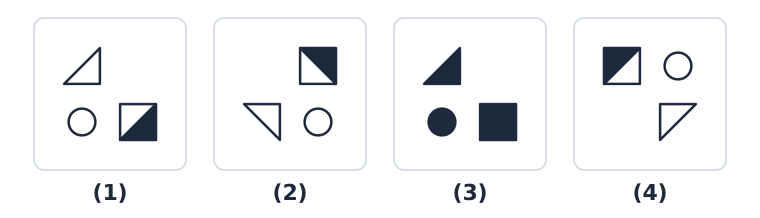
Three of the four figures are the same figure turned round. Which figure is different from the others?
advanced
A1
B2
C3
D4
Show answer
Answer: 3
Why:
Turn the figures in your mind so that one part matches. Three of them then match exactly. Figure (3) never matches: its black and white parts are swapped.
Q46
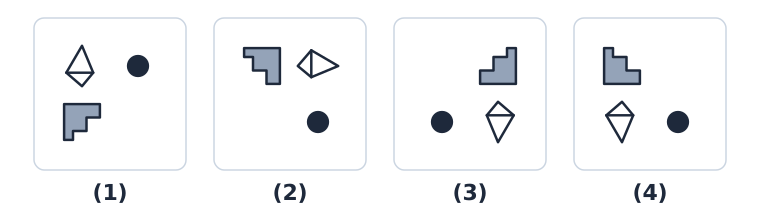
Three of the four figures are the same figure turned round. Which figure is different from the others?
beginner
A1
B2
C3
D4
Show answer
Answer: 4
Why:
Turn the figures in your mind so that one part matches. Three of them then match exactly. Figure (4) never matches: it is a mirror image of the others, and no turn can make a mirror image.
Q47
Three of the four figures are the same figure turned round. Which figure is different from the others?
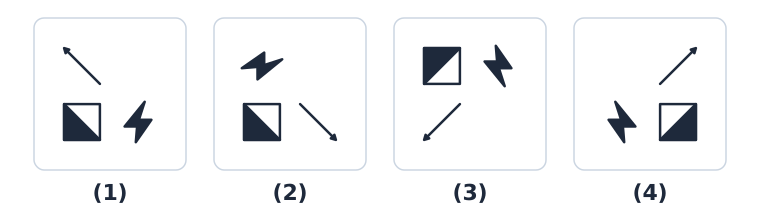
intermediate
A1
B2
C3
D4
Show answer
Answer: 1
Why:
Turn the figures in your mind so that one part matches. Three of them then match exactly. Figure (1) never matches: it is a mirror image of the others, and no turn can make a mirror image.
Q48
Three of the four figures are the same figure turned round. Which figure is different from the others?
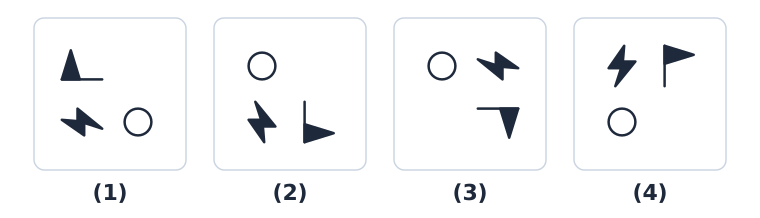
advanced
A1
B2
C3
D4
Show answer
Answer: 2
Why:
Turn the figures in your mind so that one part matches. Three of them then match exactly. Figure (2) never matches: it is a mirror image of the others, and no turn can make a mirror image.
Q49
Three of the four figures are the same figure turned round. Which figure is different from the others?
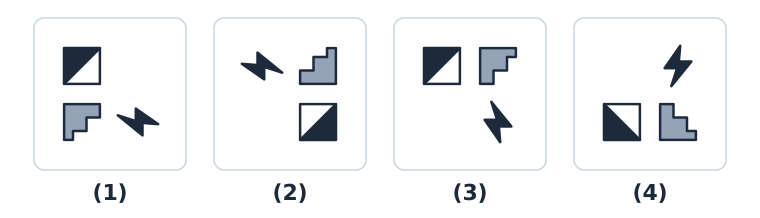
intermediate
A1
B2
C3
D4
Show answer
Answer: 3
Why:
Turn the figures in your mind so that one part matches. Three of them then match exactly. Figure (3) never matches: it is a mirror image of the others, and no turn can make a mirror image.
Q50
Three of the four figures are the same figure turned round. Which figure is different from the others?
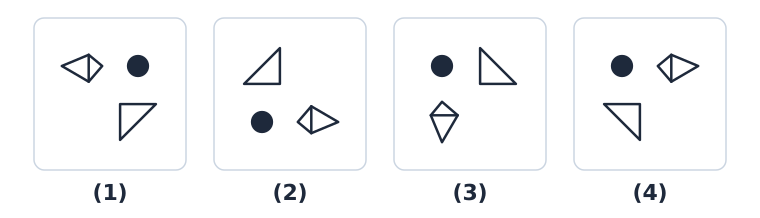
beginner
A1
B2
C3
D4
Show answer
Answer: 4
Why:
Turn the figures in your mind so that one part matches. Three of them then match exactly. Figure (4) never matches: it is a mirror image of the others, and no turn can make a mirror image.
Q51
A symbol moves 3 places clockwise around the 8 border places of a square frame each time. After how many moves is it back where it started?
advanced
A24
B3
C4
D8
Show answer
Answer: 8
Why:
It returns when 3 × moves is a multiple of 8. The smallest such number of moves is 8 (3 × 8 = 24 = 3 full rounds).
Q52
An arrow turns 45° clockwise, then 90°, then 135° (growing by 45° each time). How far does it turn at the next step?
intermediate
A180°
B225°
C90°
D135°
Show answer
Answer: 180°
Why:
The turns grow by 45°: 45°, 90°, 135°, so next is 180°.
Q53
Turning a figure 90° anticlockwise gives the same result as turning it how far clockwise?
beginner
A180°
B270°
C360°
D90°
Show answer
Answer: 270°
Why:
90° one way is 360° − 90° = 270° the other way.
Q54
Three figures are the same figure turned through 0°, 90° and 180°. The fourth is the mirror image of the first. Why is the fourth the odd one?
intermediate
AIt is turned through 270°
BMirror images are always the same as the figure
CNo turn can produce a mirror image
DIt has more parts
Show answer
Answer: No turn can produce a mirror image
Why:
Turning keeps the handedness; a flip reverses it, so the mirror image never matches a turned copy (unless the figure is symmetric).
Q55
In a series, the centre shape is a triangle, square, pentagon, hexagon. What is the total number of sides in the next two figures together?
beginner
A13
B14
C16
D15
Show answer
Answer: 15
Why:
The next two shapes have 7 and 8 sides: 7 + 8 = 15.
Q56
A dot moves 1, 2, 3 and 4 places clockwise in four moves from the top-left corner of a square frame (8 border places). Where is it after the fourth move?
advanced
ATop-right corner
BTop-left corner
CBottom-left corner
DBottom-right corner
Show answer
Answer: Top-right corner
Why:
It moves 1 + 2 + 3 + 4 = 10 places = one full round (8) + 2 places, so it is 2 places clockwise from the top-left corner: the top-right corner.
Q57
Assertion (A): A figure turned 90° clockwise three times looks the same as the figure turned 90° anticlockwise once.
Reason (R): Three turns of 90° make 270°, and 270° clockwise is 90° anticlockwise.
intermediate
ABoth A and R are true, and R is the correct explanation of A
BBoth A and R are true, but R is not the correct explanation of A
CA is true but R is false
DA is false but R is true
Show answer
Answer: Both A and R are true, and R is the correct explanation of A
Why:
Both are true and R gives the reason: 270° + 90° = 360°.
Q58
Assertion (A): Among four figures where three are turns of one figure, the mirror image of that figure is the odd one.
Reason (R): A mirror image is a turn of 180°.
advanced
ABoth A and R are true, and R is the correct explanation of A
BBoth A and R are true, but R is not the correct explanation of A
CA is true but R is false
DA is false but R is true
Show answer
Answer: A is true but R is false
Why:
A is true (for a figure that is not symmetric), but R is false: a mirror image is a flip, not any turn.
Q59
About figure series, which statements are true?
1. An arrow that turns two places each time turns 90° each time.
2. Moving 6 places clockwise is the same as moving 2 places anticlockwise on an 8-place frame.
intermediate
A1 only
B2 only
CBoth 1 and 2
DNeither 1 nor 2
Show answer
Answer: Both 1 and 2
Why:
Two places are 2 × 45° = 90°, and 6 + 2 = 8 is a full round, so both are true.
Q60
About figure analogy, which statements are true?
1. If figure 2 is figure 1 flipped left to right, the answer is figure 3 turned through 180°.
2. The same change that turns figure 1 into figure 2 must be applied to figure 3.
beginner
A1 only
B2 only
CBoth 1 and 2
DNeither 1 nor 2
Show answer
Answer: 2 only
Why:
A left-right flip of figure 3 is needed, not a 180° turn, so only statement 2 is true.
Important short questions (3)
Why should you follow one element at a time in a figure series?
Each element changes by its own rule. Mixing them hides the rules; separating them makes each rule a simple step count.
How many degrees is one place of an arrow's turn, and why?
45°, because 8 equal places make a full turn of 360°.
How do you find the odd figure when three figures are turns of one figure?
Turn each figure in your mind to match one part of the others. The one that never matches is a mirror image (or otherwise changed), and that is the odd one.
Long answer questions (1)
Describe a step-by-step method for a figure series question with a moving symbol and a turning arrow, and explain how to use the options to save time.
Number the 8 border places. For the symbol, write the step and direction between each pair of figures and check whether the step is constant or growing; find its next place. For the arrow, write each turn in 45° units in the same way.
Then check the options one element at a time: reject any option whose symbol is in the wrong place, then any whose arrow points the wrong way. Usually one option is left.
Flashcards (12)
How many places on a square frame's border?
8 (4 corners, 4 middles)
One place of an arrow turn is?
45°
Two places clockwise, 4 times: total?
8 places = back to start
3 places clockwise is the same as?
5 places anticlockwise
Steps 1, 2, 3: next step?
4
First thing in a series question?
Pick one element and follow it
Analogy A : B :: C : ? means?
Do to C what turned A into B
Can a turn give a mirror image?
No
Odd one out among turned figures?
The mirror image
90° clockwise twice equals?
180°
90° clockwise three times equals?
90° anticlockwise
Centre shape: triangle, square, pentagon, ?
Hexagon
Play this topic
Turn or flip?
Counting Triangles and Squares
Count triangles, squares and rectangles in line figures without missing any: count by size, use the formulas for lines from a corner and for grids, and watch for tilted and large shapes.
What you will be able to do
I can count triangles in a figure systematically by size.
I can use the formula for lines drawn from one corner of a triangle.
I can count squares and rectangles in a grid with formulas.
I can spot tilted squares and large shapes that are easy to miss.
Key points
Count by size: first the smallest pieces, then shapes made of 2 pieces, then 3, and so on up to the whole figure.
A triangle needs three corners joined pairwise by drawn lines; a line that only looks close does not count.
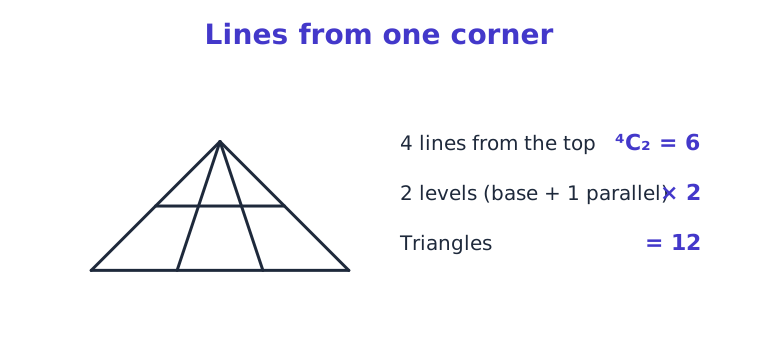
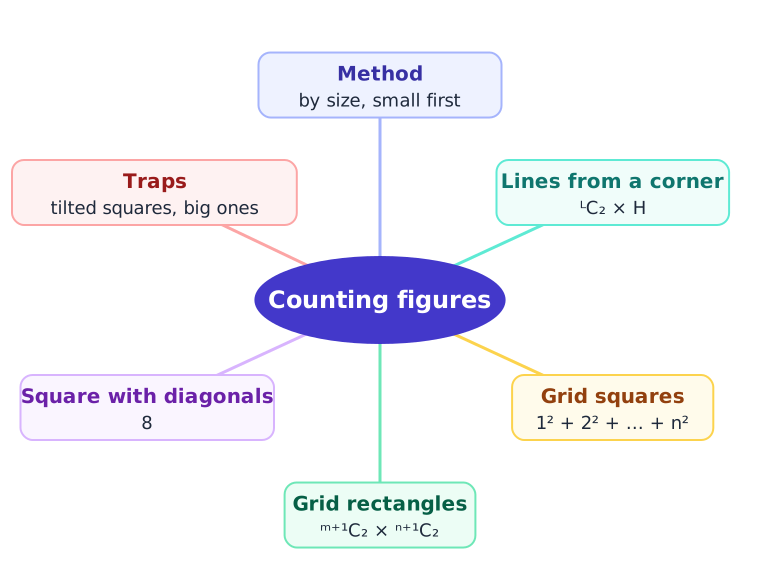
Triangle with L lines from the top corner (sides included) and H horizontal levels (base included): $^LC_2\times H$ triangles.
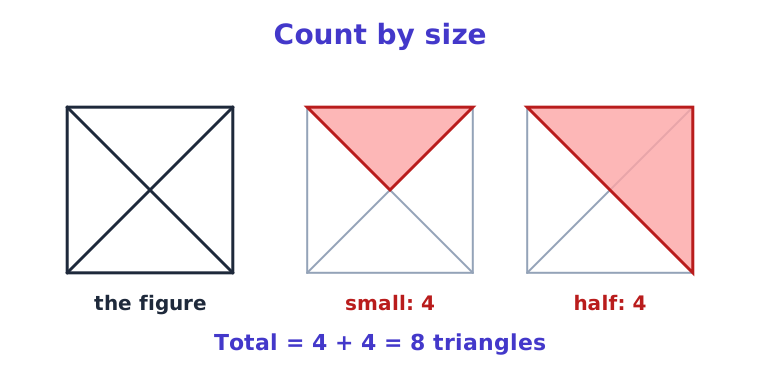
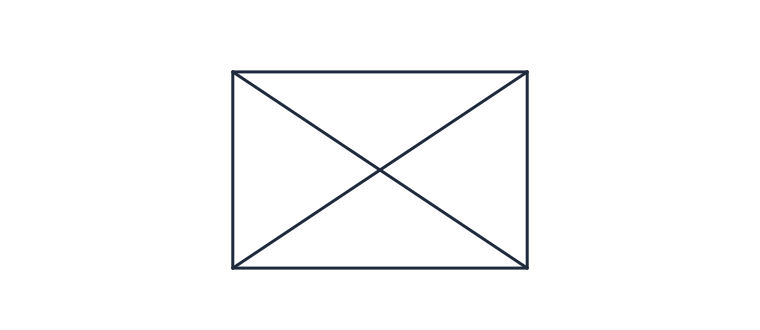
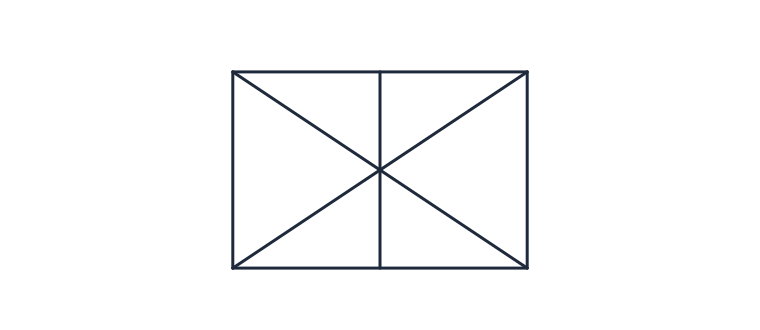
A square with both diagonals has 8 triangles; adding both midlines makes 16.
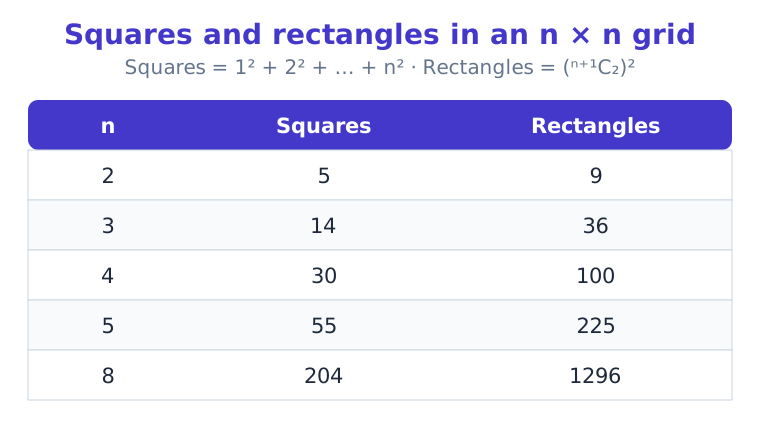
Squares in an n × n grid: $1^2+2^2+\dots+n^2$. A chessboard has 204.
Rectangles in an m × n grid: choose 2 of the m + 1 vertical lines and 2 of the n + 1 horizontal lines.
Squares in an m × n grid (m ≥ n): $mn+(m-1)(n-1)+(m-2)(n-2)+\dots$ until a factor reaches 0.
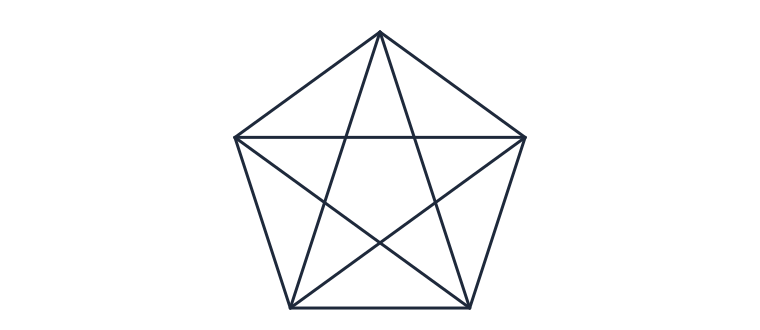
A pentagon with all its diagonals (a star inside) has 35 triangles.
Full explanation
Arjun's temple floor
Arjun's grandmother shows him the stone floor of the village temple: squares cut by diagonals. "How many triangles can you find?" she asks. Arjun says 8. She laughs: "Count again."
In this topic you learn to count without missing a single one.
Count by size
The safe method is to count by size. First count the smallest pieces. Then shapes made of two pieces, then three, and so on, up to the whole figure. Write the count of each size and add.
What counts as a triangle
Three corners, each pair joined by a drawn line. The corners can be where lines cross, not only where they end. A line that stops short does not join two corners.
Lines from one corner
If L lines leave the top corner of a triangle (the two sides included) and reach a base, any 2 of them make a triangle with the base: $^LC_2$ triangles. With H horizontal levels (the base included), multiply: $^LC_2\times H$.
Squares and rectangles in a grid
In an n × n grid there are n² small squares, (n − 1)² squares of side 2, and so on, down to 1 big square. Rectangles are fixed by any 2 vertical and any 2 horizontal lines.
Hidden shapes
Examiners love shapes that are easy to miss: the tilted square made by joining midpoints, the big triangle made of four small ones, and the whole figure itself. After counting, look once more for these.
Exam shortcuts
Small first, then bigger.
Lines from a corner: $^LC_2\times H$.
Square with diagonals: 8; with midlines too: 16.
n × n grid: $1^2+\dots+n^2$ squares.
Pentagon with all diagonals: 35 triangles.
Back to Arjun
Arjun counts again by size: 4 small triangles, then 4 half-squares. "Eight," he says, "and in the next tile with midlines, sixteen." His grandmother nods. "Now you count like a mason."
Mind map
The whole topic on one page.
Concepts and terms
Systematic counting
Group shapes by size or by a fixed corner so that every shape is counted exactly once.
Lines from a corner
Any 2 of the lines from the top corner, with one horizontal line, make one triangle: hence $^LC_2\times H$.
Grid formulas
In a grid, a k × k square can sit in (n − k + 1)² places, which gives the sum of squares.
Did you know
A chessboard holds 204 squares and 1296 rectangles, though most people say 64.
Memory tricks
Counting order — Small, double, triple, whole — Count single pieces, then shapes of 2, 3 pieces, up to the whole figure.
Chessboard — 204 squares, 1296 rectangles — Sum of squares 1 to 8, and $^9C_2\times{}^9C_2=36\times36$.
Practice MCQs with answers (59)
Q1
How many triangles are there in the figure?
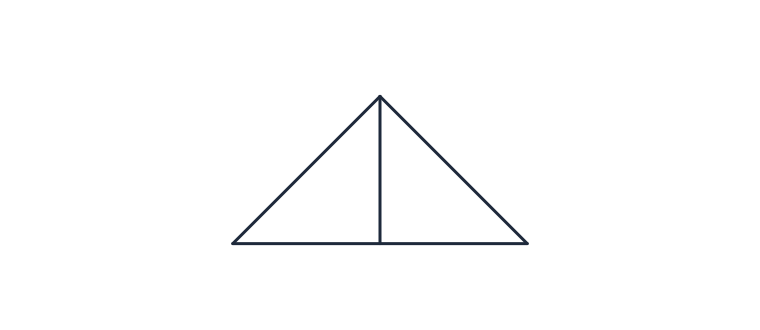
beginner
A3
B1
C5
D2
Show answer
Answer: 3
Why:
There are 3 triangles. Shortcut: 3 lines from the top corner give $^{3}C_2=3$ triangles. Counting only the 2 smallest pieces is the usual mistake.
Q2
How many triangles are there in the figure?
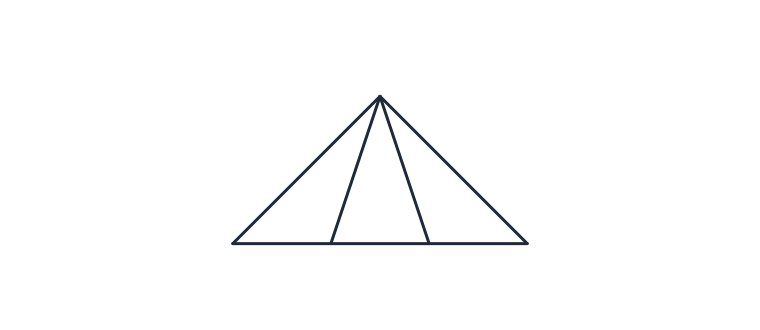
beginner
A4
B6
C8
D3
Show answer
Answer: 6
Why:
There are 6 triangles. Shortcut: 4 lines from the top corner give $^{4}C_2=6$ triangles. Counting only the 3 smallest pieces is the usual mistake.
Q3
How many triangles are there in the figure?
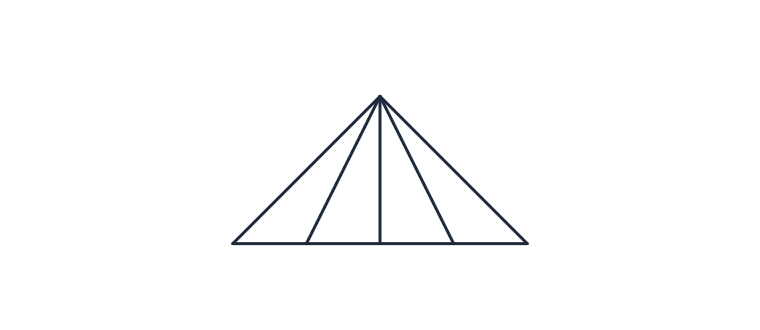
intermediate
A8
B12
C10
D4
Show answer
Answer: 10
Why:
There are 10 triangles. Shortcut: 5 lines from the top corner give $^{5}C_2=10$ triangles. Counting only the 4 smallest pieces is the usual mistake.
Q4
How many triangles are there in the figure?
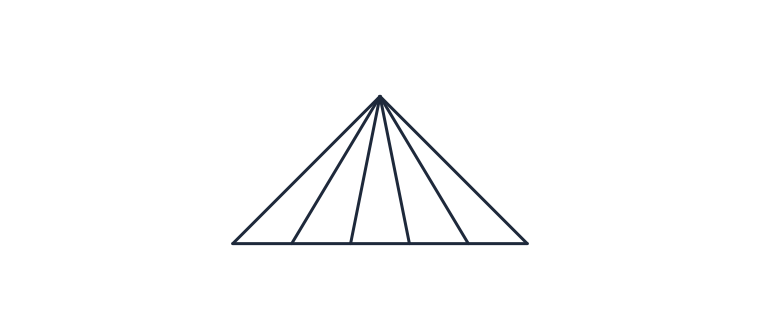
intermediate
A13
B17
C5
D15
Show answer
Answer: 15
Why:
There are 15 triangles. Shortcut: 6 lines from the top corner give $^{6}C_2=15$ triangles. Counting only the 5 smallest pieces is the usual mistake.
Q5
How many triangles are there in the figure?
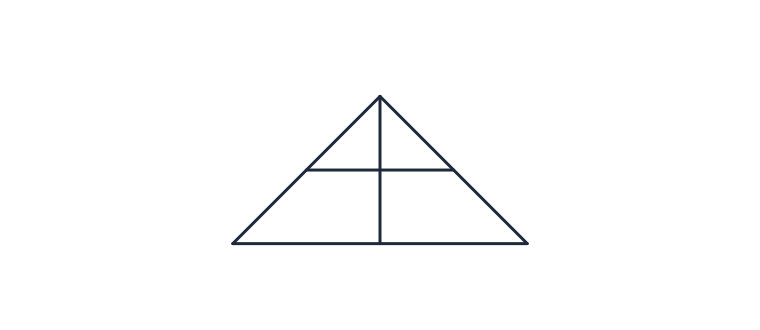
beginner
A6
B4
C8
D2
Show answer
Answer: 6
Why:
There are 6 triangles. Shortcut: 3 lines from the top corner give $^{3}C_2=3$ triangles on each of the 2 levels, so 3 × 2 = 6. Counting only the 2 smallest pieces is the usual mistake.
Q6
How many triangles are there in the figure?
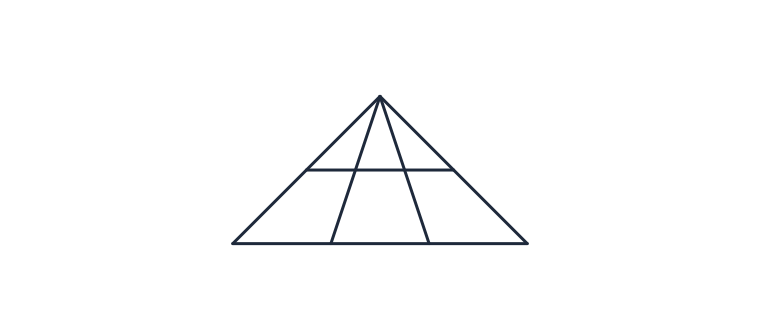
intermediate
A3
B12
C10
D14
Show answer
Answer: 12
Why:
There are 12 triangles. Shortcut: 4 lines from the top corner give $^{4}C_2=6$ triangles on each of the 2 levels, so 6 × 2 = 12. Counting only the 3 smallest pieces is the usual mistake.
Q7
How many triangles are there in the figure?
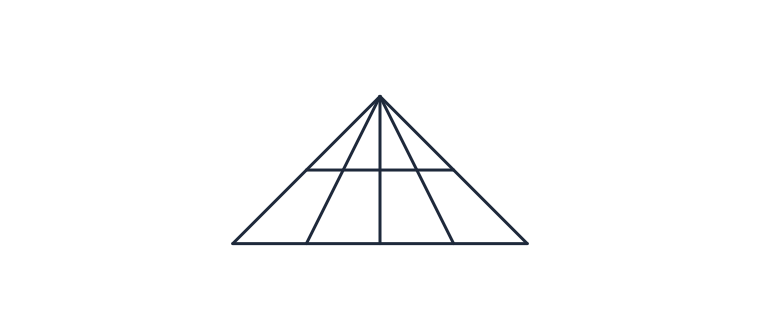
intermediate
A22
B4
C20
D18
Show answer
Answer: 20
Why:
There are 20 triangles. Shortcut: 5 lines from the top corner give $^{5}C_2=10$ triangles on each of the 2 levels, so 10 × 2 = 20. Counting only the 4 smallest pieces is the usual mistake.
Q8
How many triangles are there in the figure?
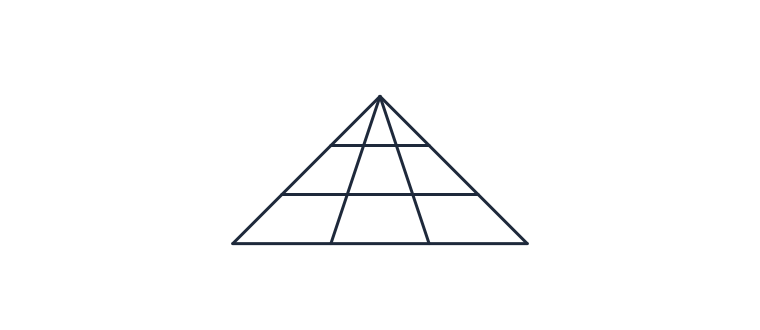
advanced
A3
B16
C20
D18
Show answer
Answer: 18
Why:
There are 18 triangles. Shortcut: 4 lines from the top corner give $^{4}C_2=6$ triangles on each of the 3 levels, so 6 × 3 = 18. Counting only the 3 smallest pieces is the usual mistake.
Q9
How many triangles are there in the figure?
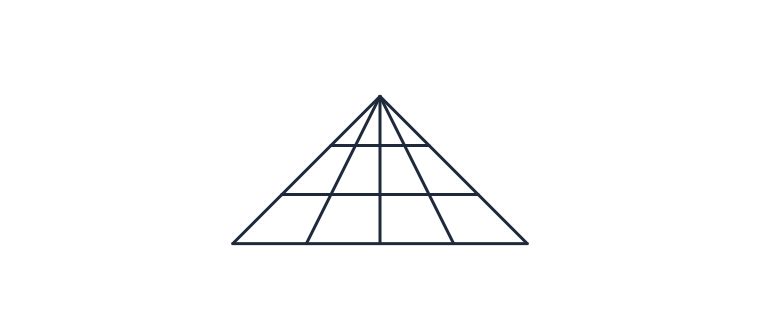
advanced
A30
B32
C4
D28
Show answer
Answer: 30
Why:
There are 30 triangles. Shortcut: 5 lines from the top corner give $^{5}C_2=10$ triangles on each of the 3 levels, so 10 × 3 = 30. Counting only the 4 smallest pieces is the usual mistake.
Q10
How many triangles are there in the figure?
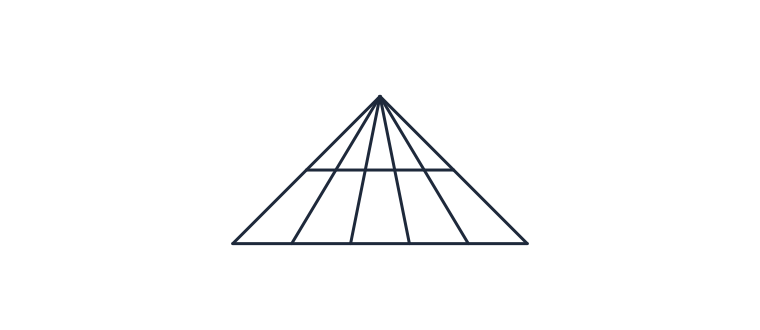
advanced
A32
B30
C5
D28
Show answer
Answer: 30
Why:
There are 30 triangles. Shortcut: 6 lines from the top corner give $^{6}C_2=15$ triangles on each of the 2 levels, so 15 × 2 = 30. Counting only the 5 smallest pieces is the usual mistake.
Q11
How many triangles are there in the figure?
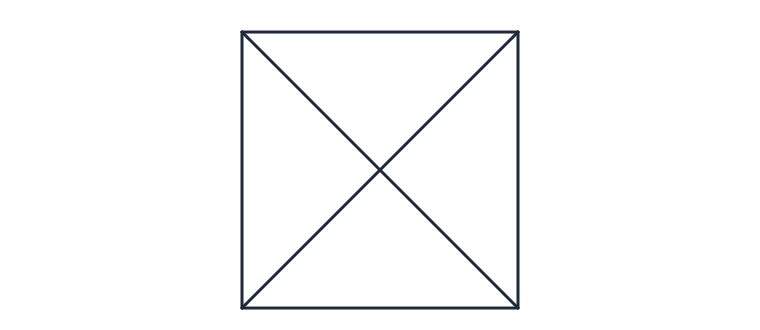
beginner
A6
B10
C8
D4
Show answer
Answer: 8
Why:
Count by size, smallest first, so nothing is missed: 4 + 4 = 8 triangles. Counting only the 4 smallest pieces is the usual mistake.
Q12
How many triangles are there in the figure?
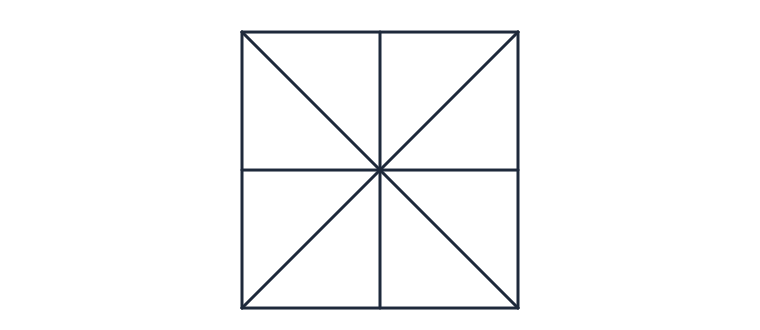
intermediate
A14
B18
C8
D16
Show answer
Answer: 16
Why:
Count by size, smallest first, so nothing is missed: 8 + 4 + 4 = 16 triangles. Counting only the 8 smallest pieces is the usual mistake.
Q13
How many triangles are there in the figure?
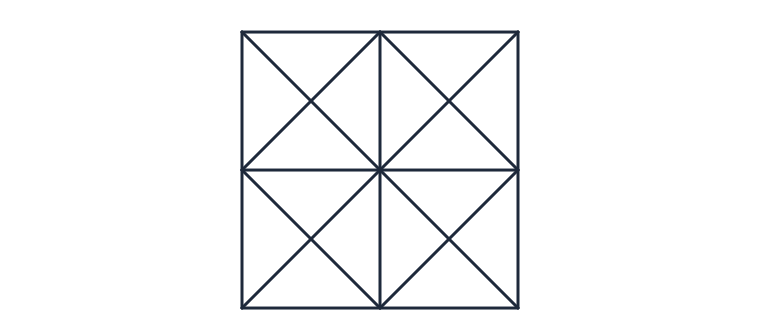
advanced
A44
B16
C42
D46
Show answer
Answer: 44
Why:
Count by size, smallest first, so nothing is missed: 16 + 16 + 8 + 4 = 44 triangles. Counting only the 16 smallest pieces is the usual mistake.
Q14
How many triangles are there in the figure?
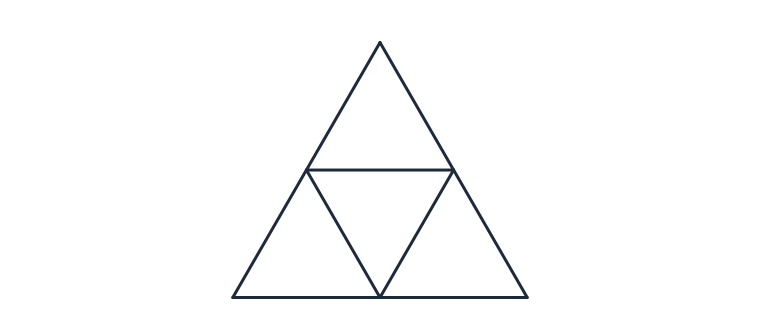
beginner
A3
B5
C7
D4
Show answer
Answer: 5
Why:
Count by size, smallest first, so nothing is missed: 4 + 1 = 5 triangles. Counting only the 4 smallest pieces is the usual mistake.
Q15
How many triangles are there in the figure?
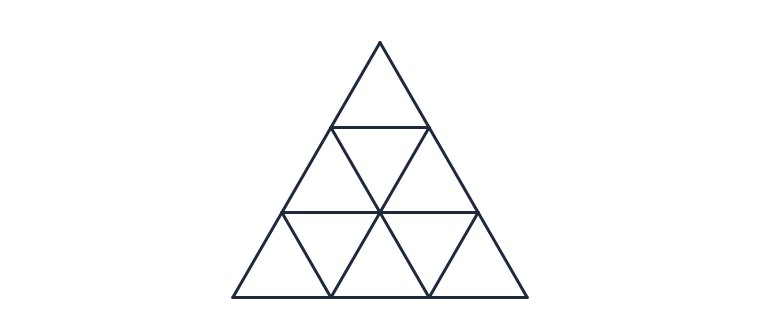
intermediate
A15
B9
C13
D11
Show answer
Answer: 13
Why:
Count by size, smallest first, so nothing is missed: 9 + 3 + 1 = 13 triangles. Counting only the 9 smallest pieces is the usual mistake.
Q16
How many triangles are there in the figure?
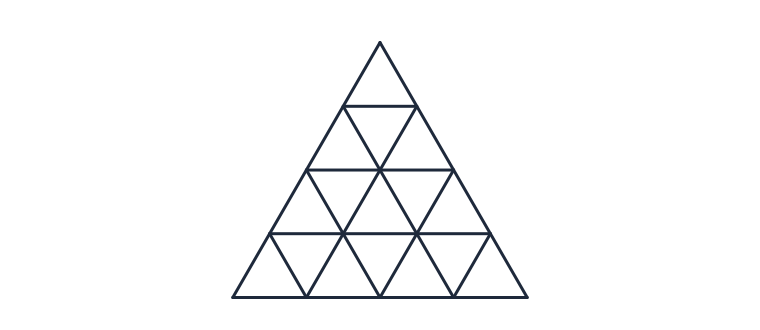
advanced
A25
B29
C16
D27
Show answer
Answer: 27
Why:
Count by size, smallest first, so nothing is missed: 16 + 7 + 3 + 1 = 27 triangles. Counting only the 16 smallest pieces is the usual mistake.
Q17
How many triangles are there in the figure?
advanced
A35
B10
C33
D37
Show answer
Answer: 35
Why:
Count by size, smallest first, so nothing is missed: 5 + 5 + 10 + 10 + 5 = 35 triangles. Counting only the 10 smallest pieces is the usual mistake.
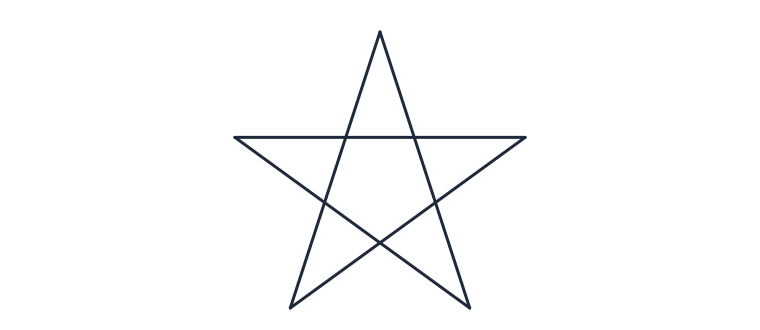
Q18
How many triangles are there in the figure?
intermediate
A12
B10
C5
D8
Show answer
Answer: 10
Why:
Count by size, smallest first, so nothing is missed: 5 + 5 = 10 triangles. Counting only the 5 smallest pieces is the usual mistake.
Q19
How many triangles are there in the figure?
beginner
A10
B4
C8
D6
Show answer
Answer: 8
Why:
Count by size, smallest first, so nothing is missed: 4 + 4 = 8 triangles. Counting only the 4 smallest pieces is the usual mistake.
Q20
How many triangles are there in the figure?
intermediate
A14
B6
C10
D12
Show answer
Answer: 12
Why:
Count by size, smallest first, so nothing is missed: 4 + 4 + 4 = 12 triangles. Counting only the 6 smallest pieces is the usual mistake.
Q21
How many triangles are there in the figure?
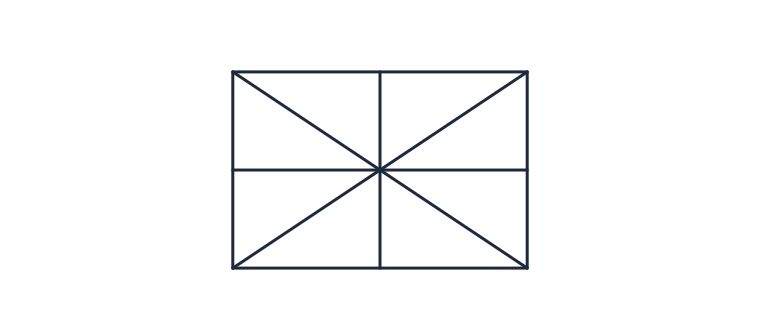
advanced
A16
B18
C8
D14
Show answer
Answer: 16
Why:
Count by size, smallest first, so nothing is missed: 8 + 4 + 4 = 16 triangles. Counting only the 8 smallest pieces is the usual mistake.
Q22
How many triangles are there in the figure?
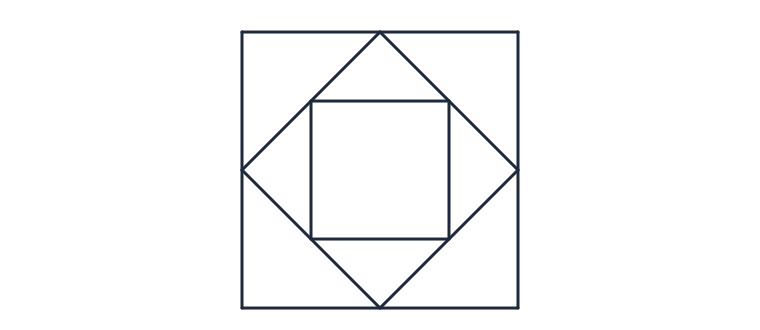
intermediate
A6
B8
C10
D4
Show answer
Answer: 8
Why:
Count by size, smallest first, so nothing is missed: 4 + 4 = 8 triangles. Counting only the 4 smallest pieces is the usual mistake.
Q23
How many triangles are there in the figure?
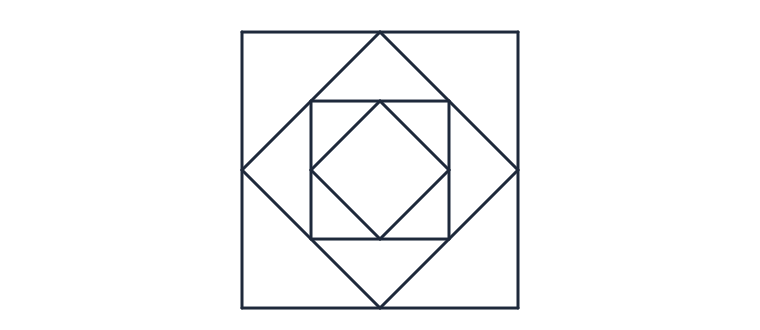
advanced
A10
B14
C12
D4
Show answer
Answer: 12
Why:
Count by size, smallest first, so nothing is missed: 4 + 4 + 4 = 12 triangles. Counting only the 4 smallest pieces is the usual mistake.
Q24
How many triangles are there in the figure?
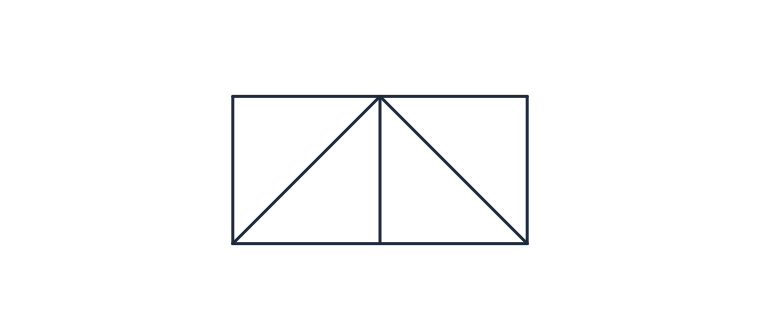
beginner
A4
B3
C7
D5
Show answer
Answer: 5
Why:
Count by size, smallest first, so nothing is missed: 4 + 1 = 5 triangles. Counting only the 4 smallest pieces is the usual mistake.
Q25
How many triangles are there in the figure?
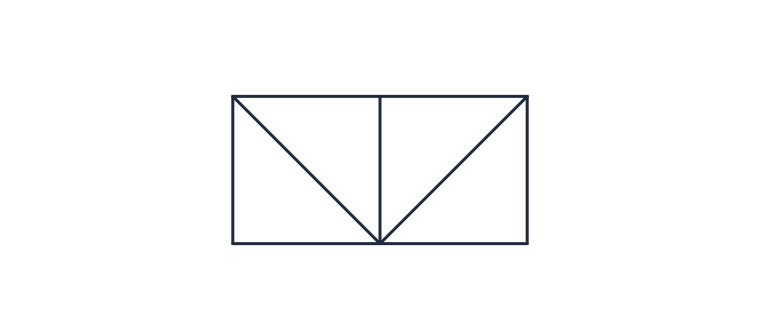
intermediate
A5
B3
C7
D4
Show answer
Answer: 5
Why:
Count by size, smallest first, so nothing is missed: 4 + 1 = 5 triangles. Counting only the 4 smallest pieces is the usual mistake.
Q26
How many triangles are there in the figure?
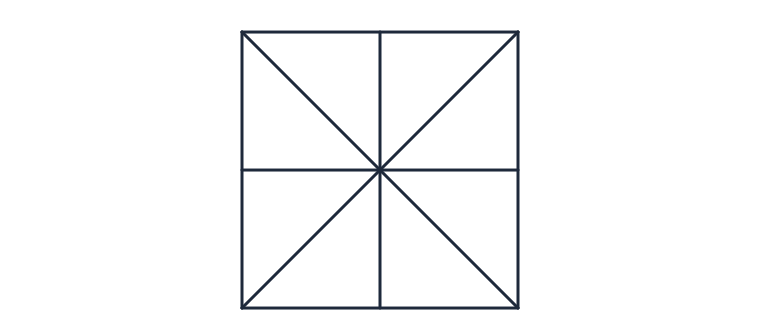
intermediate
A8
B16
C14
D18
Show answer
Answer: 16
Why:
Count by size, smallest first, so nothing is missed: 8 + 4 + 4 = 16 triangles. Counting only the 8 smallest pieces is the usual mistake.
Q27
How many triangles are there in the figure?
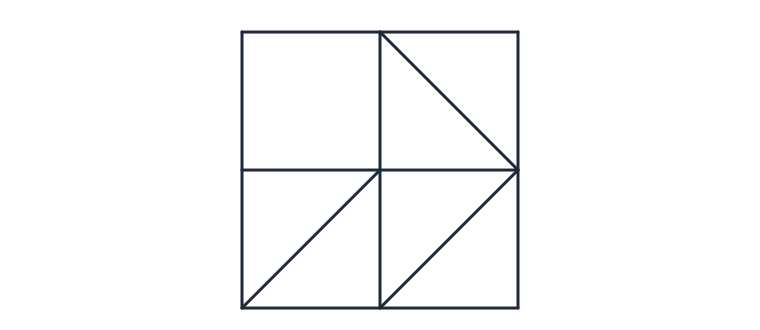
advanced
A9
B6
C7
D5
Show answer
Answer: 7
Why:
Count by size, smallest first, so nothing is missed: 6 + 1 = 7 triangles. Counting only the 6 smallest pieces is the usual mistake.
Q28
How many triangles are there in the figure?
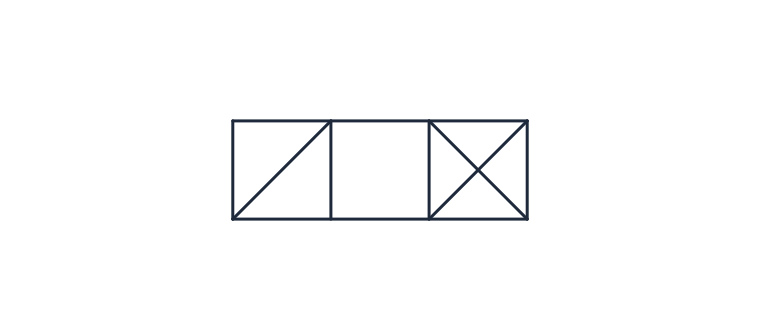
intermediate
A6
B8
C12
D10
Show answer
Answer: 10
Why:
Count by size, smallest first, so nothing is missed: 4 + 6 = 10 triangles. Counting only the 6 smallest pieces is the usual mistake.
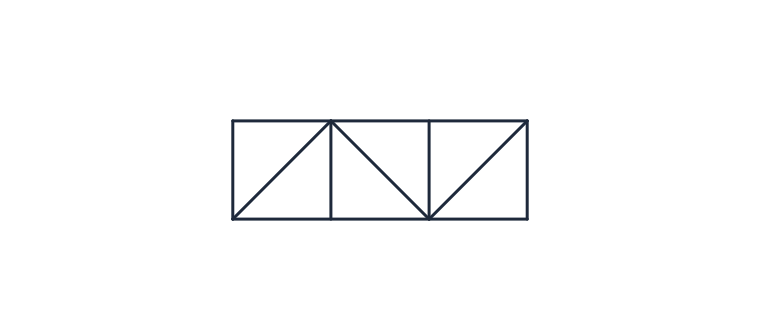
Q29
How many triangles are there in the figure?
beginner
A8
B10
C7
D6
Show answer
Answer: 8
Why:
Count by size, smallest first, so nothing is missed: 6 + 2 = 8 triangles. Counting only the 6 smallest pieces is the usual mistake.
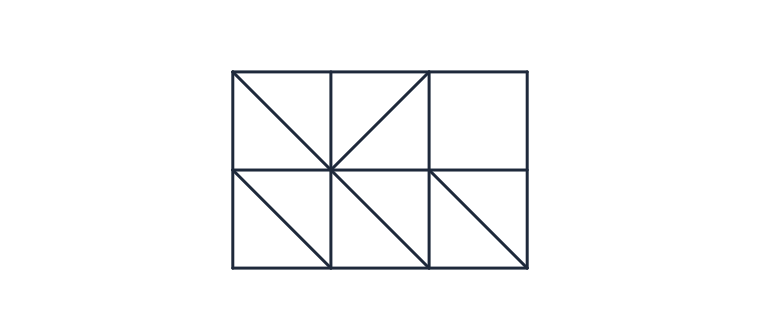
Q30
How many triangles are there in the figure?
advanced
A12
B14
C16
D10
Show answer
Answer: 14
Why:
Count by size, smallest first, so nothing is missed: 10 + 2 + 2 = 14 triangles. Counting only the 10 smallest pieces is the usual mistake.
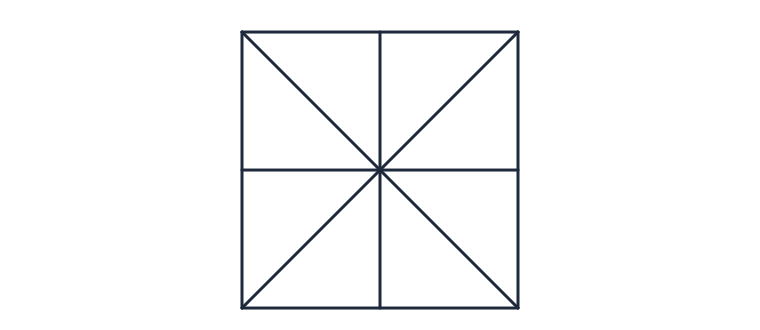
Q31
How many triangles are there in the figure?
intermediate
A14
B18
C16
D8
Show answer
Answer: 16
Why:
Count by size, smallest first, so nothing is missed: 8 + 4 + 4 = 16 triangles. Counting only the 8 smallest pieces is the usual mistake.
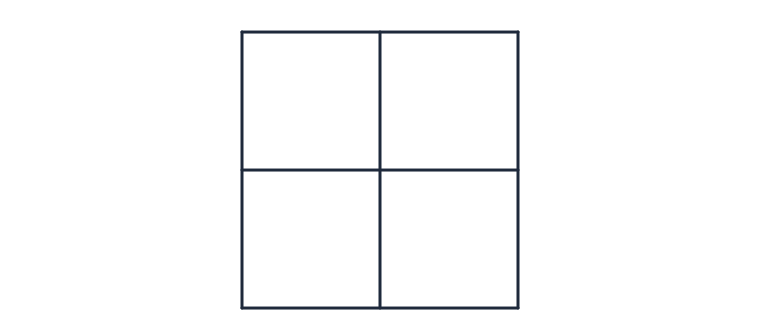
Q32
How many squares are there in the figure?
beginner
Q33
How many squares are there in the figure?
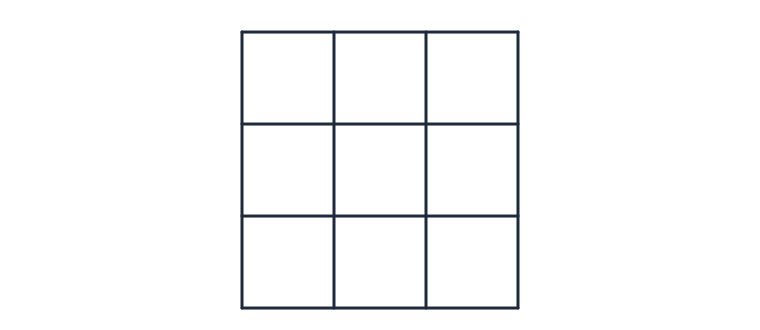
beginner
Q34
How many squares are there in the figure?
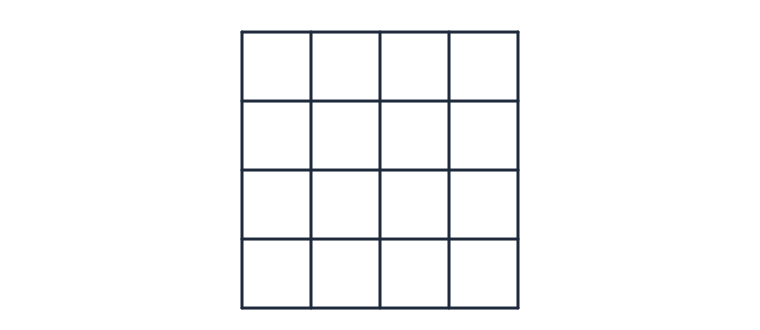
intermediate
Q35
How many squares are there in the figure?
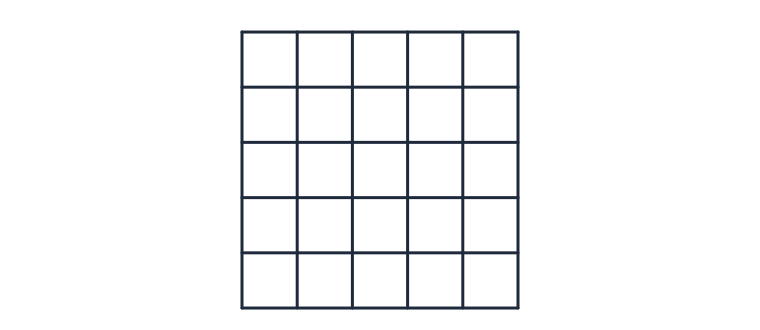
advanced
Q36
How many squares are there in the figure?
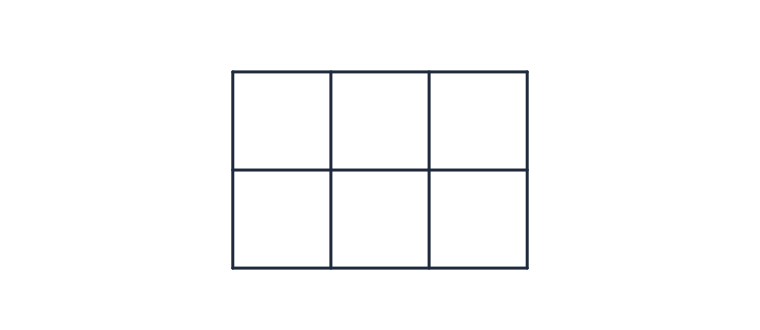
beginner
Q37
How many squares are there in the figure?
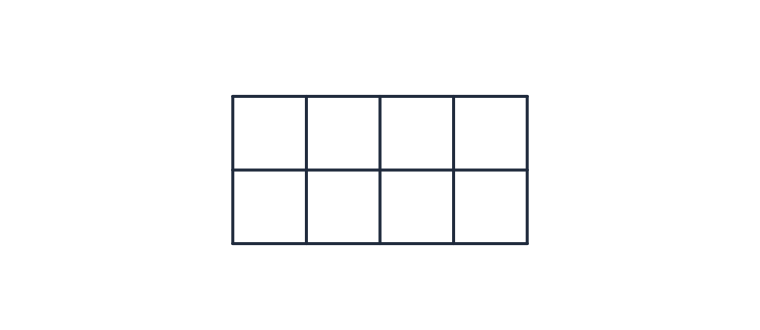
intermediate
Q38
How many squares are there in the figure?
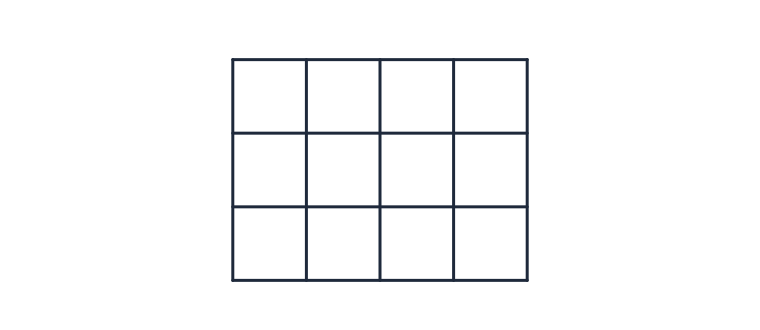
intermediate
Q39
How many squares are there in the figure?
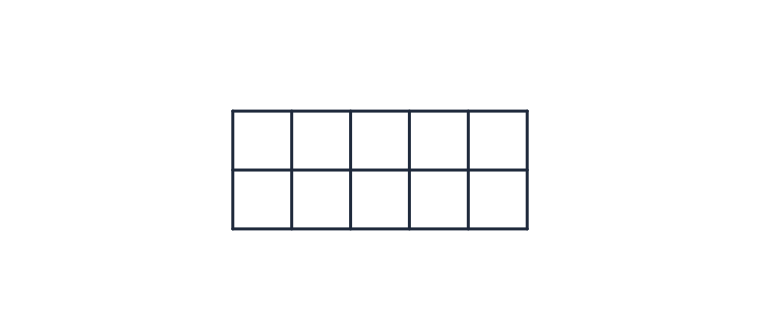
advanced
Q40
How many squares are there in the figure?
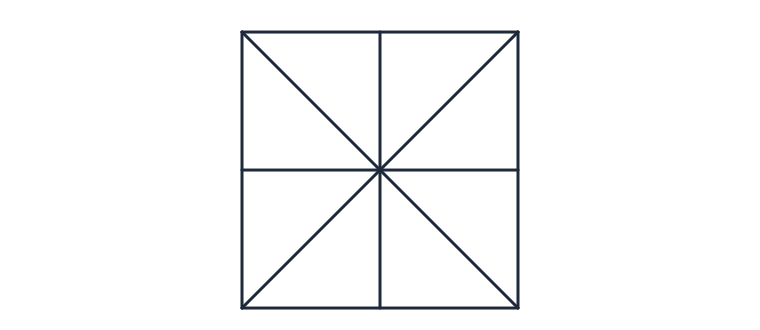
intermediate
A7
B4
C6
D5
Show answer
Answer: 5
Why:
Count by size, smallest first: 4 + 1 = 5 squares.
Q41
How many squares are there in the figure?
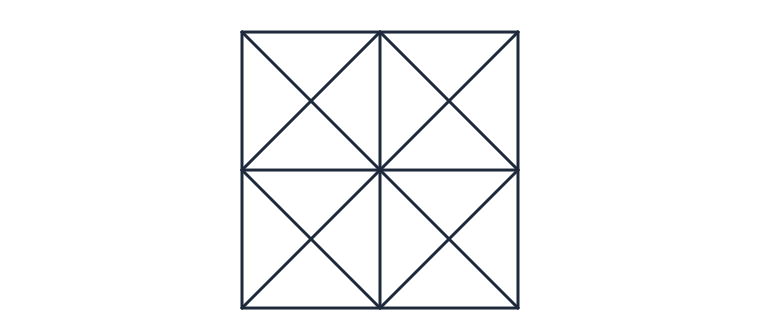
advanced
A10
B5
C4
D9
Show answer
Answer: 10
Why:
Count by size, smallest first: 4 + 4 + 1 + 1 = 10 squares. Do not miss the 5 tilted ones.
Q42
How many squares are there in the figure?
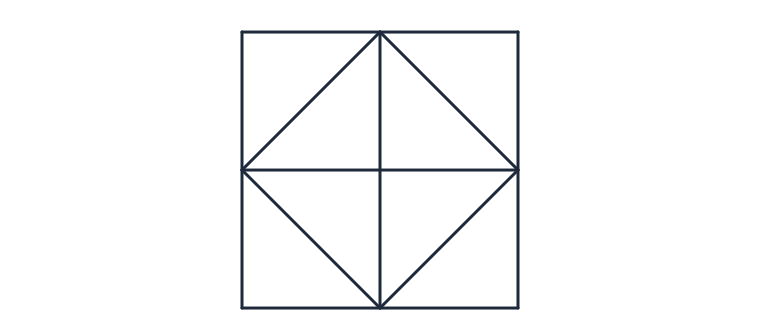
intermediate
A7
B6
C5
D4
Show answer
Answer: 6
Why:
Count by size, smallest first: 4 + 1 + 1 = 6 squares. Do not miss the 1 tilted one.
Q43
How many squares are there in the figure?
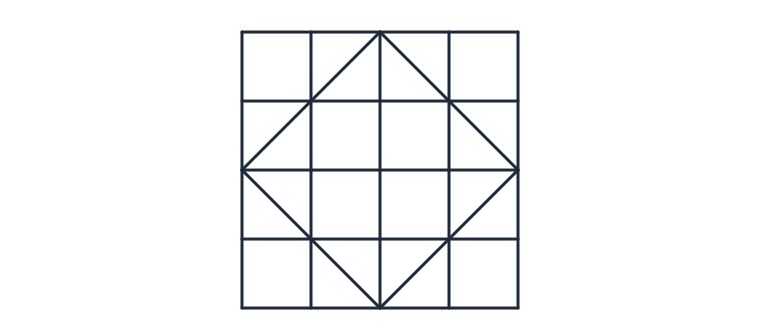
advanced
A30
B16
C31
D32
Show answer
Answer: 31
Why:
Count by size, smallest first: 16 + 9 + 1 + 4 + 1 = 31 squares. Do not miss the 1 tilted one.
Q44
How many squares are there in the figure?
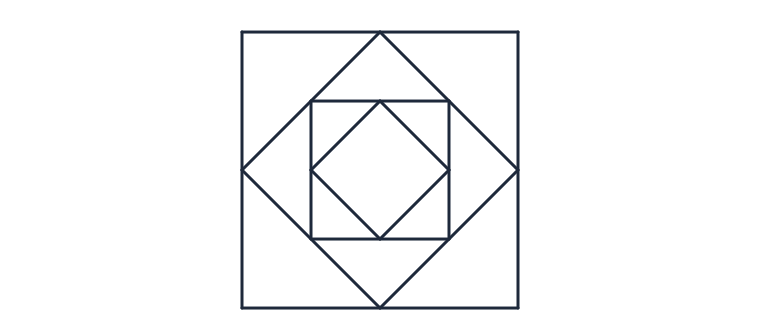
beginner
A3
B2
C1
D4
Show answer
Answer: 4
Why:
Count by size, smallest first: 1 + 1 + 1 + 1 = 4 squares. Do not miss the 2 tilted ones.
Q45
How many rectangles (squares included) are there in the figure?
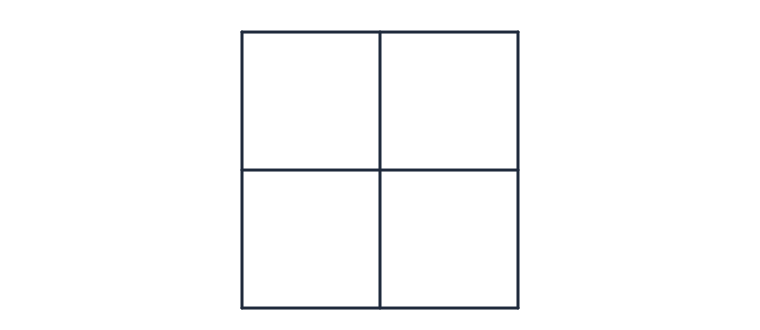
beginner
A9
B5
C13
D4
Show answer
Answer: 9
Why:
A rectangle is fixed by choosing 2 of the 3 vertical lines and 2 of the 3 horizontal lines: 3 × 3 = 9.
Q46
How many rectangles (squares included) are there in the figure?
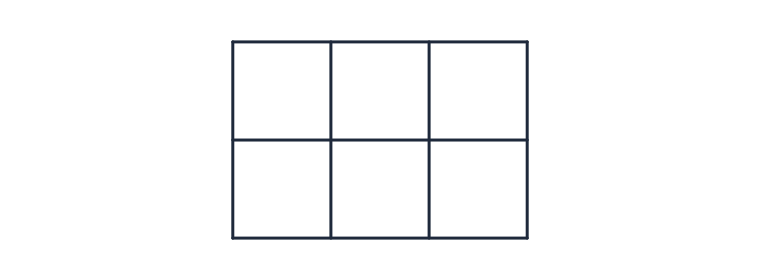
intermediate
A8
B18
C10
D6
Show answer
Answer: 18
Why:
A rectangle is fixed by choosing 2 of the 4 vertical lines and 2 of the 3 horizontal lines: 6 × 3 = 18.
Q47
How many rectangles (squares included) are there in the figure?
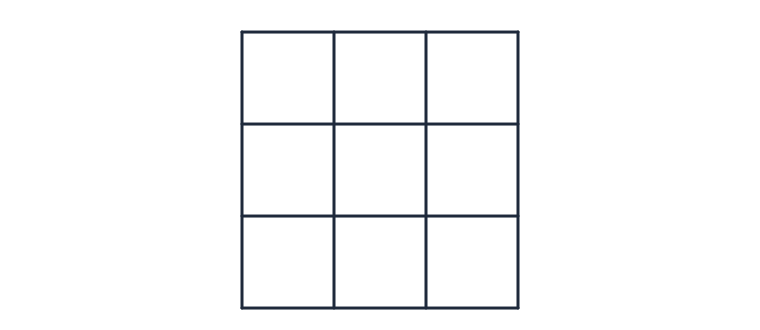
intermediate
A22
B9
C36
D14
Show answer
Answer: 36
Why:
A rectangle is fixed by choosing 2 of the 4 vertical lines and 2 of the 4 horizontal lines: 6 × 6 = 36.
Q48
How many rectangles (squares included) are there in the figure?
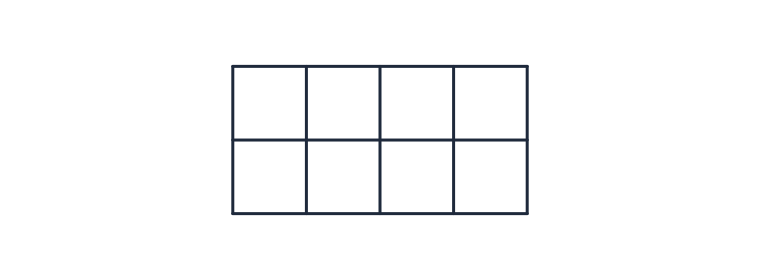
advanced
A11
B19
C8
D30
Show answer
Answer: 30
Why:
A rectangle is fixed by choosing 2 of the 5 vertical lines and 2 of the 3 horizontal lines: 10 × 3 = 30.
Q49
How many rectangles (squares included) are there in the figure?
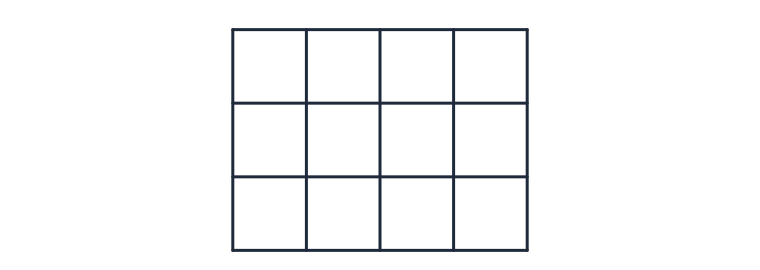
advanced
A60
B20
C40
D12
Show answer
Answer: 60
Why:
A rectangle is fixed by choosing 2 of the 5 vertical lines and 2 of the 4 horizontal lines: 10 × 6 = 60.
Q50
How many squares are there on a standard 8 × 8 chessboard (all sizes)?
intermediate
A1296
B204
C64
D196
Show answer
Answer: 204
Why:
$1^2+2^2+\dots+8^2=204$. Only the 64 small squares is the trap.
Q51
How many rectangles (squares included) are there on an 8 × 8 chessboard?
advanced
A784
B204
C1296
D1092
Show answer
Answer: 1296
Why:
Choose 2 of 9 vertical and 2 of 9 horizontal lines: $36\times36=1296$.
Q52
In a triangle, 5 lines are drawn from the top corner to the base (besides the two sides). How many triangles are formed?
intermediate
A6
B28
C15
D21
Show answer
Answer: 21
Why:
7 lines from the top in all: $^7C_2=21$.
Q53
How many squares are there in a 6 × 6 grid of small squares?
beginner
A91
B36
C55
D441
Show answer
Answer: 91
Why:
$36+25+16+9+4+1=91$.
Q54
How many rectangles are there in a single row of 6 equal small squares?
intermediate
A36
B21
C6
D15
Show answer
Answer: 21
Why:
Choose 2 of the 7 vertical lines (the 2 horizontal lines are fixed): $^7C_2=21$.
Q55
How many squares are there in a grid of 5 columns and 3 rows of small squares?
advanced
A15
B23
C26
D35
Show answer
Answer: 26
Why:
$5\times3+4\times2+3\times1=15+8+3=26$.
Q56
Assertion (A): A square with both diagonals contains 8 triangles.
Reason (R): The diagonals cut the square into 4 small triangles, and each diagonal also makes 2 half-square triangles.
beginner
ABoth A and R are true, and R is the correct explanation of A
BBoth A and R are true, but R is not the correct explanation of A
CA is true but R is false
DA is false but R is true
Show answer
Answer: Both A and R are true, and R is the correct explanation of A
Why:
4 + 2 + 2 = 8, and R shows exactly where they come from.
Q57
Assertion (A): A 4 × 4 grid of small squares contains 16 squares in all.
Reason (R): A 4 × 4 grid has 16 small squares.
intermediate
ABoth A and R are true, and R is the correct explanation of A
BBoth A and R are true, but R is not the correct explanation of A
CA is true but R is false
DA is false but R is true
Show answer
Answer: A is false but R is true
Why:
R is true, but the grid also has 9 + 4 + 1 bigger squares: 30 in all. A is false.
Q58
About counting, which statements are true?
1. A 3 × 3 grid of small squares contains 14 squares.
2. A 2 × 2 grid of small squares contains 9 rectangles (squares included).
intermediate
A1 only
B2 only
CBoth 1 and 2
DNeither 1 nor 2
Show answer
Answer: Both 1 and 2
Why:
9 + 4 + 1 = 14 and $3\times3=9$: both true.
Q59
About triangles, which statements are true?
1. A triangle with 2 lines from the top corner to the base contains 6 triangles.
2. A pentagon with all its diagonals contains 10 triangles.
advanced
A1 only
B2 only
CBoth 1 and 2
DNeither 1 nor 2
Show answer
Answer: 1 only
Why:
4 lines from the top give $^4C_2=6$, so 1 is true; the pentagon with diagonals has 35, so 2 is false.
Important short questions (3)
Why is it safest to count triangles by size?
Each triangle has exactly one size, so grouping by size counts every triangle once and makes it easy to check that no group is forgotten.
Give the number of squares in a 5 × 5 grid and show the working.
$25+16+9+4+1=55$.
Explain why a triangle with L lines from its top corner (sides included) contains $^LC_2$ triangles.
Every triangle uses the top corner and the base; it is fixed by choosing its two side lines from the L lines, which can be done in $^LC_2$ ways.
Long answer questions (1)
Find the number of squares and of rectangles in a 3 × 3 grid, and explain both formulas.
Squares: a k × k square fits in (4 − k)² positions, so 9 + 4 + 1 = 14.
Rectangles: any 2 of the 4 vertical lines and any 2 of the 4 horizontal lines make one rectangle: $^4C_2\times{}^4C_2=6\times6=36$.
Flashcards (12)
Triangles in a square with both diagonals?
8
Add both midlines to it: triangles?
16
Triangle, 3 lines from the top corner to the base: triangles?
10
Squares in a 3 × 3 grid?
14
Squares in a 4 × 4 grid?
30
Squares on a chessboard?
204
Rectangles on a chessboard?
1296
Rectangles in a 2 × 2 grid?
9
Triangles in a pentagon with all diagonals?
35
Small triangles in an equilateral triangle of side 3 split into unit triangles?
9
Safe counting order?
Smallest first, then bigger
Squares in a 3 × 2 grid?
8
Play this topic
Count check
Cubes and Dice
Count the painted faces of small cubes cut from a painted block, find opposite faces of a die from its positions or from its net, and pick the cube that a net can make.
What you will be able to do
I can count small cubes with 3, 2, 1 or 0 painted faces using their positions.
I can find the face opposite a given face from two or three positions of a die.
I can fold a net in my mind and name the opposite pairs.
I can reject cube options that show an opposite pair together or the wrong order of faces.
Key points
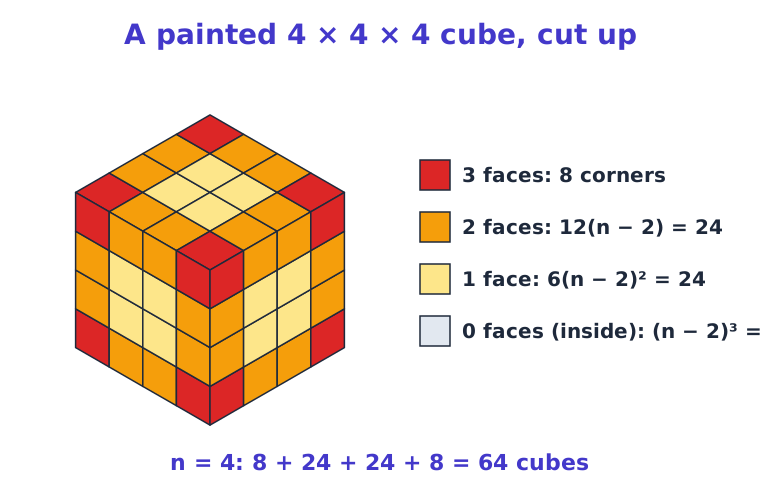
A painted n × n × n cube cut into unit cubes: 8 cubes have 3 painted faces, $12(n-2)$ have 2, $6(n-2)^2$ have 1 and $(n-2)^3$ have none.
3 painted faces = corner; 2 = edge (not corner); 1 = middle of a face; 0 = hidden inside.
The four counts always add up to the total number of small cubes. Use this to check.
At least $3(n-1)$ cuts are needed to cut a cube into $n^3$ equal cubes.
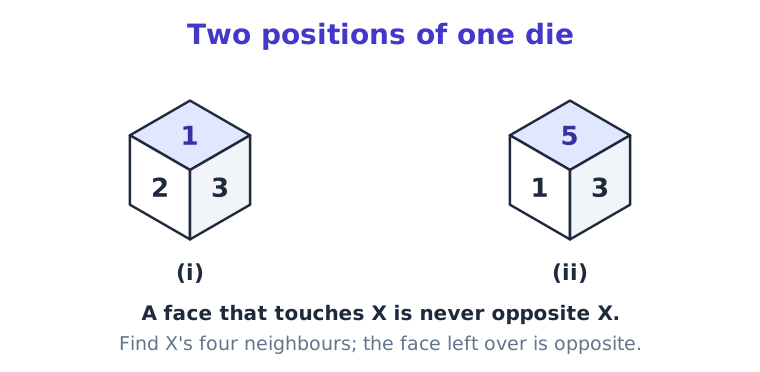
A face that touches X in any position of a die is never opposite X. Find X's four neighbours; the face left is opposite.
On a standard die, opposite faces add up to 7 (1–6, 2–5, 3–4). Use this only when the question says the die is standard.
In a net, two squares in a straight row with one square between them become opposite faces.
A cube option is impossible if it shows two opposite faces together, or the right three faces in the mirror order around the corner.
Full explanation
Meera's birthday cake
Meera's mother bakes a cube-shaped cake and covers every face with chocolate. Meera cuts it into 64 equal cubes. Her little brother wants a piece with the most chocolate, and her friend wants one with none. "How many of each are there?" asks her mother.
Where a small cube sat
A small cube's painted faces depend only on its position:
corner: 3 painted faces (always 8 corners);
edge, not a corner: 2 painted faces;
middle of a face: 1 painted face;
inside: no painted face.
The formulas
For an n × n × n cube: 3 faces: 8; 2 faces: $12(n-2)$; 1 face: $6(n-2)^2$; none: $(n-2)^3$. Check: they add up to $n^3$. For a cuboid a × b × c, replace each n − 2 by a − 2, b − 2, c − 2 along the matching edges.
When only some faces are painted
If only the top and bottom are painted, only the top and bottom layers have paint, each cube with exactly one painted face. If three faces at one corner are painted, think of an (n − 1) block hidden behind them. Picture the layers before using a formula.
Opposite faces from positions of a die
In any position you see three faces that all touch each other. So a face seen together with X is a neighbour of X, never its opposite. Collect X's neighbours from all the positions; once you have four, the sixth face is opposite X.
Nets
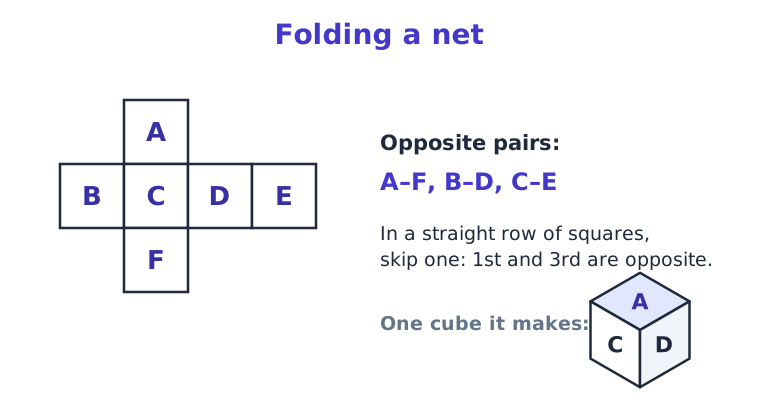
A net is six squares that fold into a cube. In a straight row of squares, skip one: the 1st and 3rd squares become opposite faces. Squares that share an edge become neighbours.
Which cube can the net make?
Reject an option if:
it shows two opposite faces side by side;
it shows the right three faces but in the mirror order around the corner.
The option that passes both checks is the answer.
Exam shortcuts
3 faces: always 8.
Check that the four counts add to $n^3$.
Least cuts for $n^3$ cubes: $3(n-1)$.
Neighbours are never opposite.
Net: skip one square in a row.
"Add to 7" only for a standard die.
Back to Meera
Meera works it out: 8 corner pieces with three chocolate faces for her brother's friends, and $(4-2)^3=8$ pieces with no chocolate at all. "Exactly eight each," she announces, and everyone is happy.
Mind map
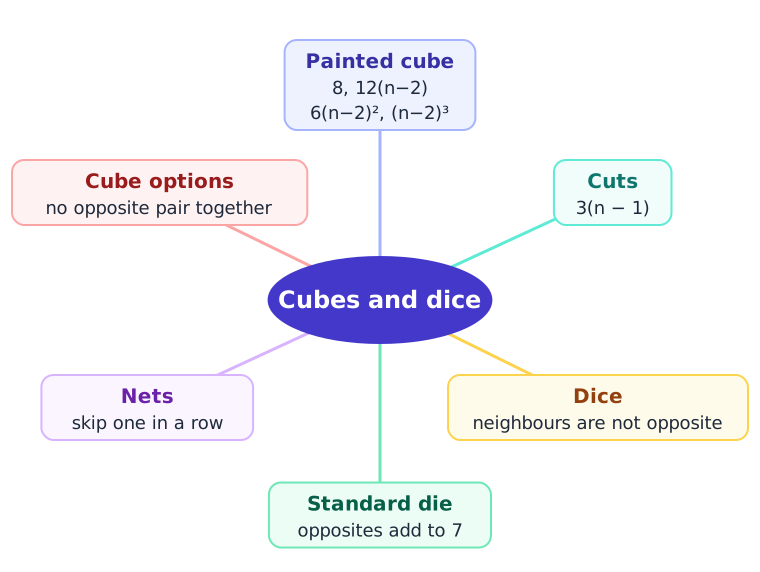
The whole topic on one page.
Concepts and terms
Painted cube
A painted block cut into unit cubes; each small cube's painted faces depend on where it sat: corner, edge, face or inside.
Opposite faces of a die
Each face has 4 neighbours and 1 opposite face. Neighbours seen together in any position are never opposite.
Net of a cube
Six squares joined edge to edge that fold into a cube. There are 11 different nets.
Order around a corner
Three faces meeting at a corner appear in a fixed clockwise order; swapping two of them gives a mirror cube that cannot be folded.
Did you know
Dice found at Harappan sites over 4000 years ago are among the oldest known; some do not have opposite faces adding to 7.
There are exactly 11 different nets that fold into a cube.
Nets — Skip one, find opposite — In a straight row of the net, the square two places away is opposite.
Practice MCQs with answers (64)
Q1
A cube of side 3 cm is painted red on all its faces and then cut into 27 cubes of side 1 cm. How many small cubes have exactly three faces painted?
beginner
A8
B6
C1
D12
Show answer
Answer: 8
Why:
Use the position of each small cube: 8 (the corners) = 8.
Q2
A cube of side 3 cm is painted red on all its faces and then cut into 27 cubes of side 1 cm. How many small cubes have exactly one face painted?
beginner
A1
B6
C8
D12
Show answer
Answer: 6
Why:
Use the position of each small cube: 6(n − 2)² = 6 × 1 = 6.
Q3
A cube of side 3 cm is painted red on all its faces and then cut into 27 cubes of side 1 cm. How many small cubes have no painted face?
beginner
A12
B6
C1
D8
Show answer
Answer: 1
Why:
Use the position of each small cube: (n − 2)³ = 1³ = 1.
Q4
A cube of side 4 cm is painted red on all its faces and then cut into 64 cubes of side 1 cm. How many small cubes have exactly two faces painted?
beginner
A8
B48
C36
D24
Show answer
Answer: 24
Why:
Use the position of each small cube: 12(n − 2) = 12 × 2 = 24.
Q5
A cube of side 4 cm is painted red on all its faces and then cut into 64 cubes of side 1 cm. How many small cubes have exactly one face painted?
intermediate
A24
B96
C54
D8
Show answer
Answer: 24
Why:
Use the position of each small cube: 6(n − 2)² = 6 × 4 = 24.
Q6
A cube of side 4 cm is painted red on all its faces and then cut into 64 cubes of side 1 cm. How many small cubes have no painted face?
beginner
A24
B8
C27
D4
Show answer
Answer: 8
Why:
Use the position of each small cube: (n − 2)³ = 2³ = 8.
Q7
A cube of side 5 cm is painted red on all its faces and then cut into 125 cubes of side 1 cm. How many small cubes have exactly two faces painted?
intermediate
A8
B54
C36
D27
Show answer
Answer: 36
Why:
Use the position of each small cube: 12(n − 2) = 12 × 3 = 36.
Q8
A cube of side 5 cm is painted red on all its faces and then cut into 125 cubes of side 1 cm. How many small cubes have exactly one face painted?
intermediate
A8
B36
C27
D54
Show answer
Answer: 54
Why:
Use the position of each small cube: 6(n − 2)² = 6 × 9 = 54.
Q9
A cube of side 5 cm is painted red on all its faces and then cut into 125 cubes of side 1 cm. How many small cubes have no painted face?
intermediate
A27
B36
C54
D8
Show answer
Answer: 27
Why:
Use the position of each small cube: (n − 2)³ = 3³ = 27.
Q10
A cube of side 6 cm is painted red on all its faces and then cut into 216 cubes of side 1 cm. How many small cubes have exactly two faces painted?
intermediate
A96
B48
C64
D8
Show answer
Answer: 48
Why:
Use the position of each small cube: 12(n − 2) = 12 × 4 = 48.
Q11
A cube of side 6 cm is painted red on all its faces and then cut into 216 cubes of side 1 cm. How many small cubes have exactly one face painted?
advanced
A64
B8
C96
D48
Show answer
Answer: 96
Why:
Use the position of each small cube: 6(n − 2)² = 6 × 16 = 96.
Q12
A cube of side 6 cm is painted red on all its faces and then cut into 216 cubes of side 1 cm. How many small cubes have no painted face?
intermediate
A96
B8
C48
D64
Show answer
Answer: 64
Why:
Use the position of each small cube: (n − 2)³ = 4³ = 64.
Q13
A cuboid 5 cm × 4 cm × 3 cm is painted red on all its faces and then cut into 60 cubes of side 1 cm. How many small cubes have no painted face?
advanced
A6
B22
C8
D24
Show answer
Answer: 6
Why:
Use the position of each small cube: (a − 2)(b − 2)(c − 2) = 3 × 2 × 1 = 6.
Q14
A cuboid 6 cm × 4 cm × 3 cm is painted red on all its faces and then cut into 72 cubes of side 1 cm. How many small cubes have exactly two faces painted?
advanced
A32
B28
C24
D8
Show answer
Answer: 28
Why:
Use the position of each small cube: 4[(a − 2) + (b − 2) + (c − 2)] = 4 × 7 = 28.
Q15
A cuboid 5 cm × 4 cm × 3 cm is painted red on all its faces and then cut into 60 cubes of side 1 cm. How many small cubes have exactly one face painted?
advanced
A8
B24
C22
D6
Show answer
Answer: 22
Why:
Use the position of each small cube: 2[(a − 2)(b − 2) + (b − 2)(c − 2) + (c − 2)(a − 2)] = 2 × 11 = 22.
Q16
A cube of side 4 cm is painted red on its top and bottom faces only and then cut into 64 cubes of side 1 cm. How many small cubes have exactly one face painted?
intermediate
A36
B28
C0
D32
Show answer
Answer: 32
Why:
Use the position of each small cube: top and bottom layers: 2 × 4² = 32.
Q17
A cube of side 5 cm is painted red on its top and bottom faces only and then cut into 125 cubes of side 1 cm. How many small cubes have no painted face?
intermediate
A75
B0
C50
D80
Show answer
Answer: 75
Why:
Use the position of each small cube: middle layers: 3 × 5² = 75.
Q18
A cube of side 4 cm is painted red on its top face only and then cut into 64 cubes of side 1 cm. How many small cubes have no painted face?
beginner
A0
B48
C16
D52
Show answer
Answer: 48
Why:
Use the position of each small cube: the other layers: 3 × 4² = 48.
Q19
A cube of side 4 cm is painted red on three faces that meet at one corner (top, front and right) and then cut into 64 cubes of side 1 cm. How many small cubes have exactly two faces painted?
advanced
A55
B1
C9
D27
Show answer
Answer: 9
Why:
Use the position of each small cube: 3(n − 1) = 3 × 3 = 9.
Q20
A cube of side 4 cm is painted red on three faces that meet at one corner (top, front and right) and then cut into 64 cubes of side 1 cm. How many small cubes have no painted face?
advanced
A1
B9
C37
D27
Show answer
Answer: 27
Why:
Use the position of each small cube: (n − 1)³ = 3³ = 27.
Q21
A cube of side 5 cm is painted red on three faces that meet at one corner (top, front and right) and then cut into 125 cubes of side 1 cm. How many small cubes have exactly one face painted?
advanced
A48
B64
C1
D12
Show answer
Answer: 48
Why:
Use the position of each small cube: 3(n − 1)² = 3 × 16 = 48.
Q22
What is the least number of straight cuts needed to cut a cube into 27 identical smaller cubes (pieces are not moved between cuts)?
beginner
A2
B6
C9
D26
Show answer
Answer: 6
Why:
3 slices in each of the 3 directions need 2 cuts each: 3 × 2 = 6.
Q23
What is the least number of straight cuts needed to cut a cube into 64 identical smaller cubes (pieces are not moved between cuts)?
intermediate
A3
B12
C9
D63
Show answer
Answer: 9
Why:
4 slices in each of the 3 directions need 3 cuts each: 3 × 3 = 9.
Q24
A cake shaped like a cuboid is cut 2 times across its length, 2 times across its width and 1 times horizontally. How many pieces are there?
beginner
A6
B9
C4
D18
Show answer
Answer: 18
Why:
Each direction gives one more piece than cuts: (2 + 1)(2 + 1)(1 + 1) = 18.
Q25
A cake shaped like a cuboid is cut 3 times across its length, 2 times across its width and 2 times horizontally. How many pieces are there?
intermediate
A36
B12
C8
D24
Show answer
Answer: 36
Why:
Each direction gives one more piece than cuts: (3 + 1)(2 + 1)(2 + 1) = 36.
Q26
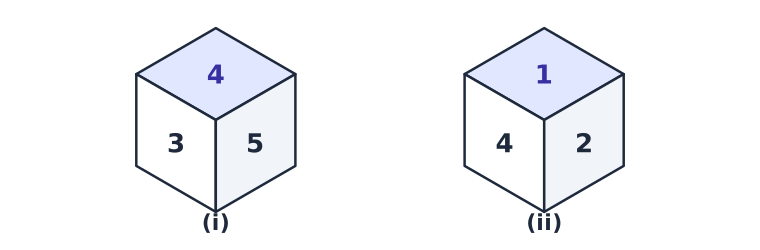
Two positions of the same die are shown. Which number is on the face opposite 4?
intermediate
A3
B6
C5
D1
Show answer
Answer: 6
Why:
Faces that touch 4 cannot be opposite it. In the views 4 touches 1, 2, 3, 5: four faces. The only face left is 6, so 6 is opposite 4. Do not assume the usual rule "opposite faces add to 7"; this die does not follow it.
Q27
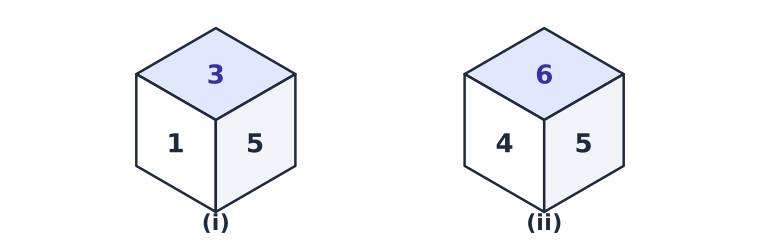
Two positions of the same die are shown. Which number is on the face opposite 5?
intermediate
A3
B1
C2
D6
Show answer
Answer: 2
Why:
Faces that touch 5 cannot be opposite it. In the views 5 touches 1, 3, 4, 6: four faces. The only face left is 2, so 2 is opposite 5. Do not assume the usual rule "opposite faces add to 7"; this die does not follow it.
Q28
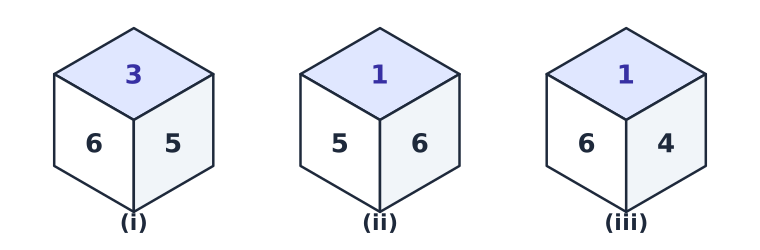
Three positions of the same die are shown. Which number is on the face opposite 6?
beginner
A5
B1
C4
D2
Show answer
Answer: 2
Why:
Faces that touch 6 cannot be opposite it. In the views 6 touches 1, 3, 4, 5: four faces. The only face left is 2, so 2 is opposite 6. Do not assume the usual rule "opposite faces add to 7"; this die does not follow it.
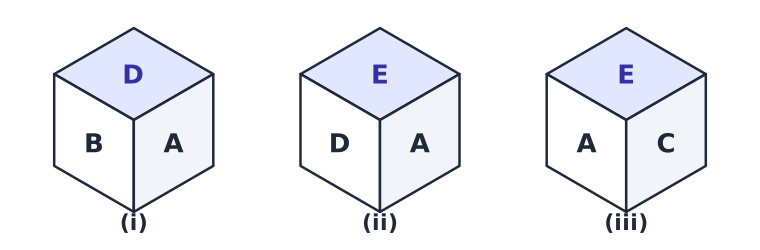
Q29
Three positions of the same die are shown. Which letter is on the face opposite A?
beginner
AF
BC
CE
DB
Show answer
Answer: F
Why:
Faces that touch A cannot be opposite it. In the views A touches B, C, D, E: four faces. The only face left is F, so F is opposite A.
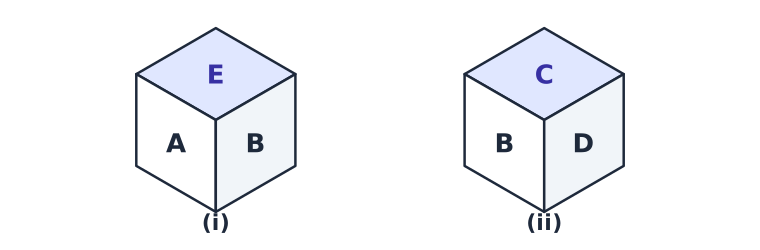
Q30
Two positions of the same die are shown. Which letter is on the face opposite B?
intermediate
AC
BF
CA
DE
Show answer
Answer: F
Why:
Faces that touch B cannot be opposite it. In the views B touches A, C, D, E: four faces. The only face left is F, so F is opposite B.
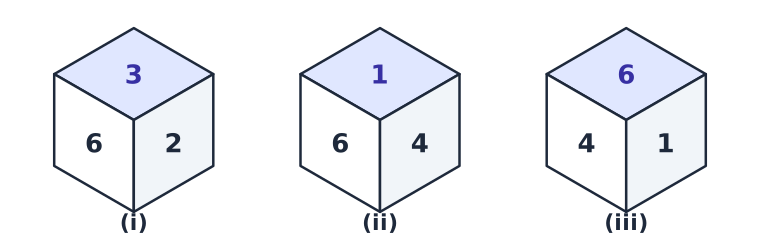
Q31
Three positions of the same die are shown. Which number is on the face opposite 6?
intermediate
A1
B4
C5
D2
Show answer
Answer: 5
Why:
Faces that touch 6 cannot be opposite it. In the views 6 touches 1, 2, 3, 4: four faces. The only face left is 5, so 5 is opposite 6. Do not assume the usual rule "opposite faces add to 7"; this die does not follow it.
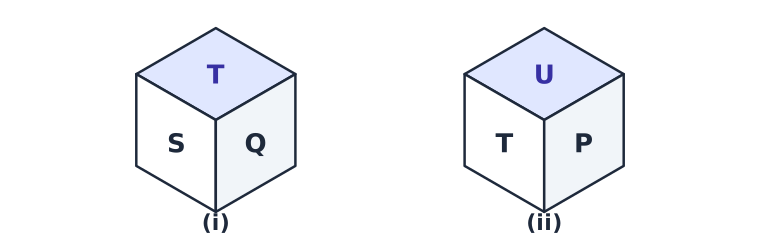
Q32
Two positions of the same die are shown. Which letter is on the face opposite T?
advanced
AP
BQ
CU
DR
Show answer
Answer: R
Why:
Faces that touch T cannot be opposite it. In the views T touches P, Q, S, U: four faces. The only face left is R, so R is opposite T.
Q33
Three positions of the same die are shown. Which letter is on the face opposite A?
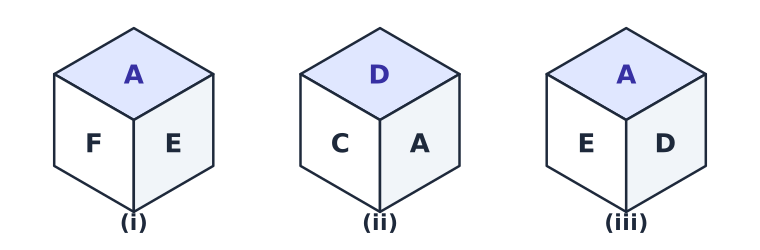
intermediate
AB
BD
CE
DC
Show answer
Answer: B
Why:
Faces that touch A cannot be opposite it. In the views A touches C, D, E, F: four faces. The only face left is B, so B is opposite A.
Q34
Two positions of the same die are shown. Which number is on the face opposite 3?
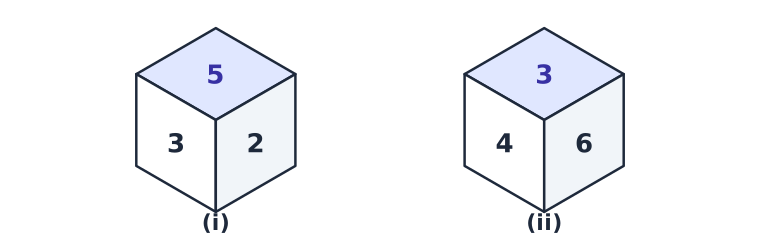
advanced
A4
B1
C2
D5
Show answer
Answer: 1
Why:
Faces that touch 3 cannot be opposite it. In the views 3 touches 2, 4, 5, 6: four faces. The only face left is 1, so 1 is opposite 3. Do not assume the usual rule "opposite faces add to 7"; this die does not follow it.
Q35
Three positions of the same die are shown. Which letter is on the face opposite M?
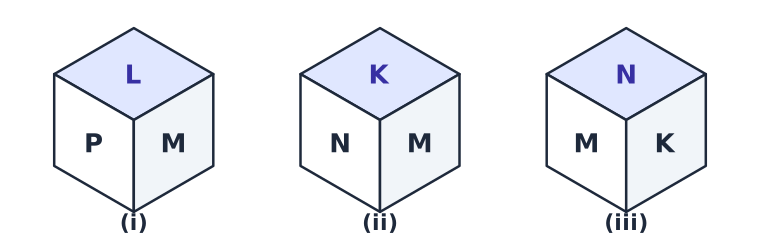
beginner
AK
BL
CO
DN
Show answer
Answer: O
Why:
Faces that touch M cannot be opposite it. In the views M touches K, L, N, P: four faces. The only face left is O, so O is opposite M.
Q36
Two positions of the same die are shown. Which letter is on the face opposite A?
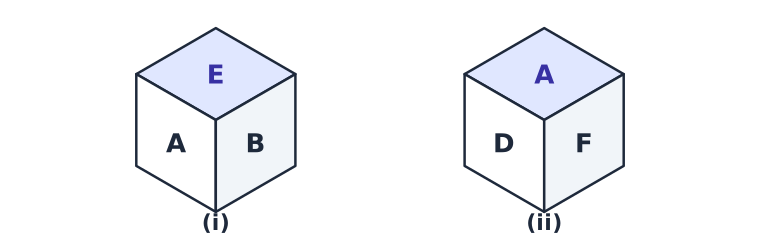
advanced
AE
BD
CF
DC
Show answer
Answer: C
Why:
Faces that touch A cannot be opposite it. In the views A touches B, D, E, F: four faces. The only face left is C, so C is opposite A.
Q37
Three positions of the same die are shown. Which number is on the face opposite 2?
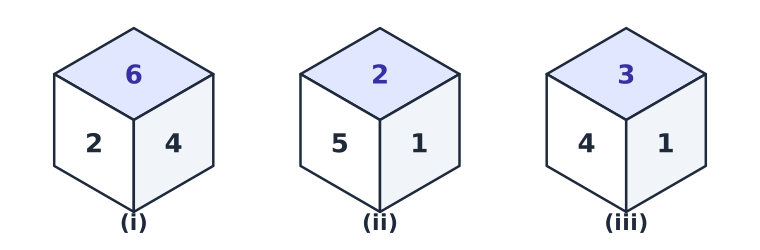
intermediate
A3
B5
C6
D4
Show answer
Answer: 3
Why:
Faces that touch 2 cannot be opposite it. In the views 2 touches 1, 4, 5, 6: four faces. The only face left is 3, so 3 is opposite 2. Do not assume the usual rule "opposite faces add to 7"; this die does not follow it.
Q38
The net below is folded to form a cube. Which number will be on the face opposite 2?

beginner
A1
B3
C6
D5
Show answer
Answer: 3
Why:
Fold it in your mind. Squares that share an edge in the net become neighbours; in a straight row of squares, the 1st and 3rd are opposite. The opposite pairs are 2–3, 5–6, 1–4, so 3 is opposite 2.
Q39
The net below is folded to form a cube. Which letter will be on the face opposite E?

beginner
AB
BA
CD
DF
Show answer
Answer: D
Why:
Fold it in your mind. Squares that share an edge in the net become neighbours; in a straight row of squares, the 1st and 3rd are opposite. The opposite pairs are A–C, F–B, E–D, so D is opposite E.
Q40
The net below is folded to form a cube. Which number will be on the face opposite 3?

intermediate
A4
B1
C5
D6
Show answer
Answer: 6
Why:
Fold it in your mind. Squares that share an edge in the net become neighbours; in a straight row of squares, the 1st and 3rd are opposite. The opposite pairs are 2–1, 5–4, 6–3, so 6 is opposite 3.
Q41
The net below is folded to form a cube. Which letter will be on the face opposite C?

intermediate
AE
BD
CB
DA
Show answer
Answer: E
Why:
Fold it in your mind. Squares that share an edge in the net become neighbours; in a straight row of squares, the 1st and 3rd are opposite. The opposite pairs are B–D, C–E, A–F, so E is opposite C.
Q42
The net below is folded to form a cube. Which number will be on the face opposite 2?

intermediate
A6
B5
C1
D3
Show answer
Answer: 5
Why:
Fold it in your mind. Squares that share an edge in the net become neighbours; in a straight row of squares, the 1st and 3rd are opposite. The opposite pairs are 5–2, 3–4, 6–1, so 5 is opposite 2.
Q43
The net below is folded to form a cube. Which letter will be on the face opposite Q?

intermediate
AS
BU
CP
DR
Show answer
Answer: P
Why:
Fold it in your mind. Squares that share an edge in the net become neighbours; in a straight row of squares, the 1st and 3rd are opposite. The opposite pairs are T–R, P–Q, S–U, so P is opposite Q.
Q44
The net below is folded to form a cube. Which number will be on the face opposite 3?

advanced
A1
B4
C2
D6
Show answer
Answer: 6
Why:
Fold it in your mind. Squares that share an edge in the net become neighbours; in a straight row of squares, the 1st and 3rd are opposite. The opposite pairs are 3–6, 2–5, 4–1, so 6 is opposite 3.
Q45
The net below is folded to form a cube. Which letter will be on the face opposite E?

advanced
AD
BF
CC
DA
Show answer
Answer: D
Why:
Fold it in your mind. Squares that share an edge in the net become neighbours; in a straight row of squares, the 1st and 3rd are opposite. The opposite pairs are B–A, C–F, D–E, so D is opposite E.
Q46
The net below is folded to form a cube. Which number will be on the face opposite 3?

advanced
A2
B6
C4
D5
Show answer
Answer: 6
Why:
Fold it in your mind. Squares that share an edge in the net become neighbours; in a straight row of squares, the 1st and 3rd are opposite. The opposite pairs are 4–2, 5–1, 3–6, so 6 is opposite 3.
Q47
The net below is folded to form a cube. Which letter will be on the face opposite C?

advanced
AA
BF
CB
DE
Show answer
Answer: B
Why:
Fold it in your mind. Squares that share an edge in the net become neighbours; in a straight row of squares, the 1st and 3rd are opposite. The opposite pairs are E–D, A–F, B–C, so B is opposite C.
Q48
The net is folded to form a cube. Which answer figure shows a cube that can be formed from it?
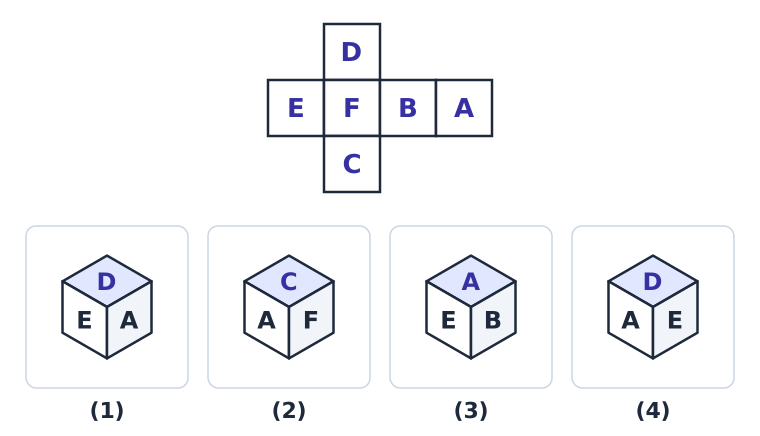
beginner
A1
B2
C3
D4
Show answer
Answer: 4
Why:
When folded, the opposite pairs are D–C, E–B, F–A. Two of the wrong cubes show an opposite pair side by side, which is impossible. Another has the right three faces but in the mirror order around the corner. Only cube (4) can be made.
Q49
The net is folded to form a cube. Which answer figure shows a cube that can be formed from it?
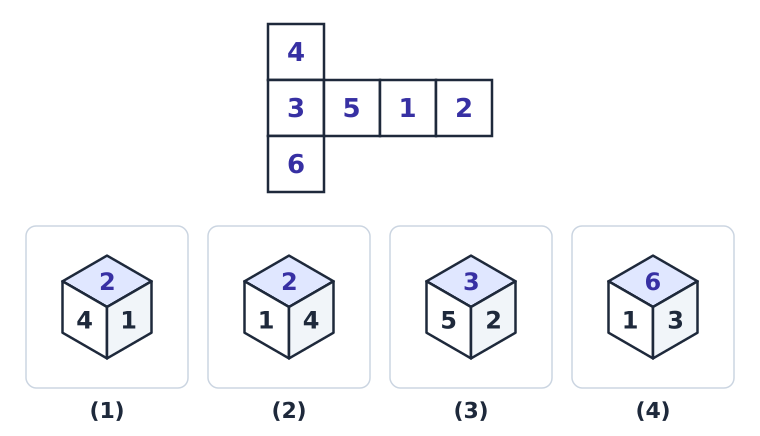
intermediate
A1
B2
C3
D4
Show answer
Answer: 1
Why:
When folded, the opposite pairs are 4–6, 3–1, 5–2. Two of the wrong cubes show an opposite pair side by side, which is impossible. Another has the right three faces but in the mirror order around the corner. Only cube (1) can be made.
Q50
The net is folded to form a cube. Which answer figure shows a cube that can be formed from it?
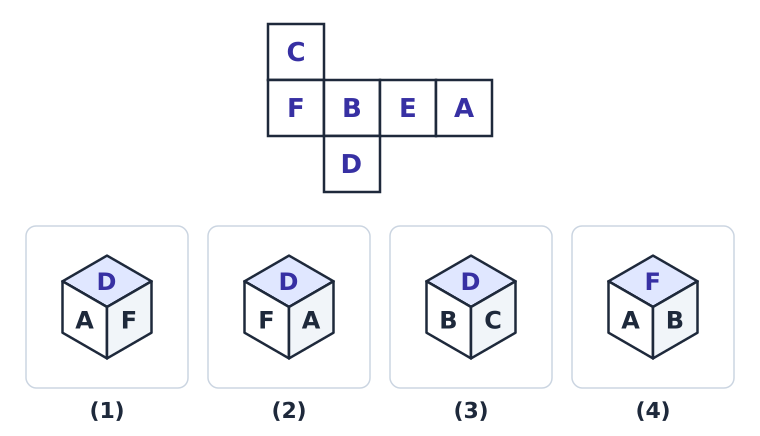
intermediate
A1
B2
C3
D4
Show answer
Answer: 2
Why:
When folded, the opposite pairs are C–D, F–E, B–A. Two of the wrong cubes show an opposite pair side by side, which is impossible. Another has the right three faces but in the mirror order around the corner. Only cube (2) can be made.
Q51
The net is folded to form a cube. Which answer figure shows a cube that can be formed from it?
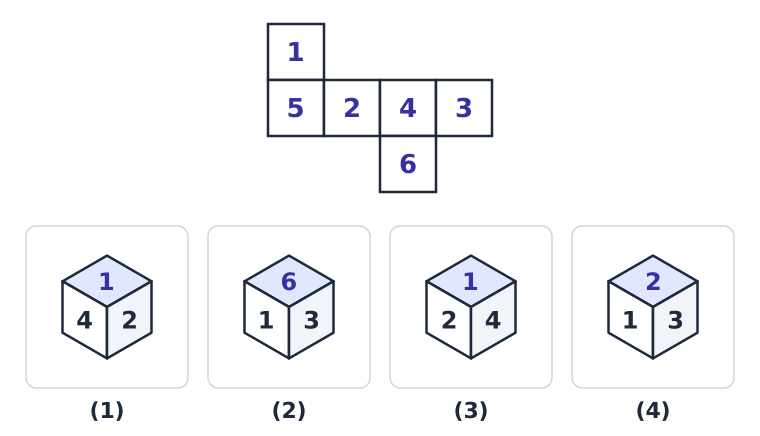
advanced
A1
B2
C3
D4
Show answer
Answer: 3
Why:
When folded, the opposite pairs are 1–6, 5–4, 2–3. Two of the wrong cubes show an opposite pair side by side, which is impossible. Another has the right three faces but in the mirror order around the corner. Only cube (3) can be made.
Q52
The net is folded to form a cube. Which answer figure shows a cube that can be formed from it?
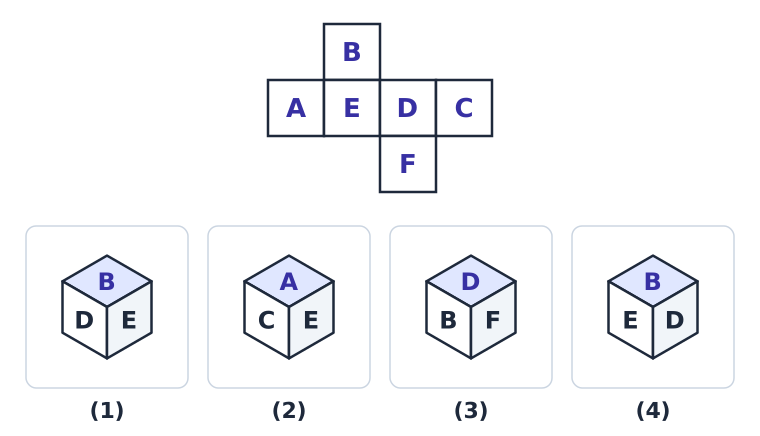
intermediate
A1
B2
C3
D4
Show answer
Answer: 4
Why:
When folded, the opposite pairs are B–F, A–D, E–C. Two of the wrong cubes show an opposite pair side by side, which is impossible. Another has the right three faces but in the mirror order around the corner. Only cube (4) can be made.
Q53
The net is folded to form a cube. Which answer figure shows a cube that can be formed from it?
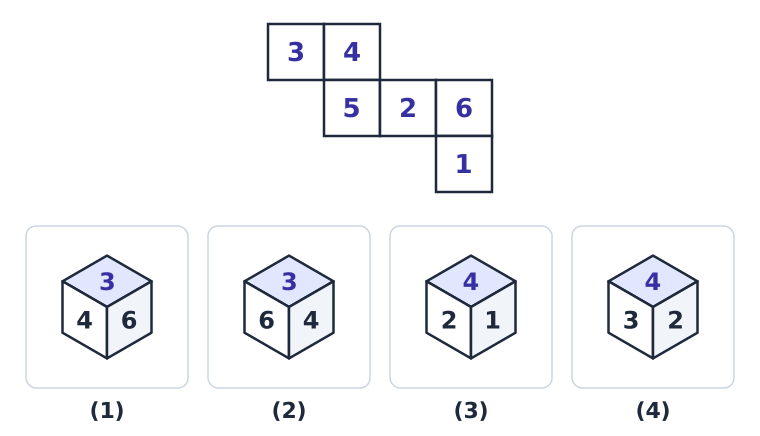
advanced
A1
B2
C3
D4
Show answer
Answer: 1
Why:
When folded, the opposite pairs are 3–2, 4–1, 5–6. Two of the wrong cubes show an opposite pair side by side, which is impossible. Another has the right three faces but in the mirror order around the corner. Only cube (1) can be made.
Q54
The net is folded to form a cube. Which answer figure shows a cube that can be formed from it?
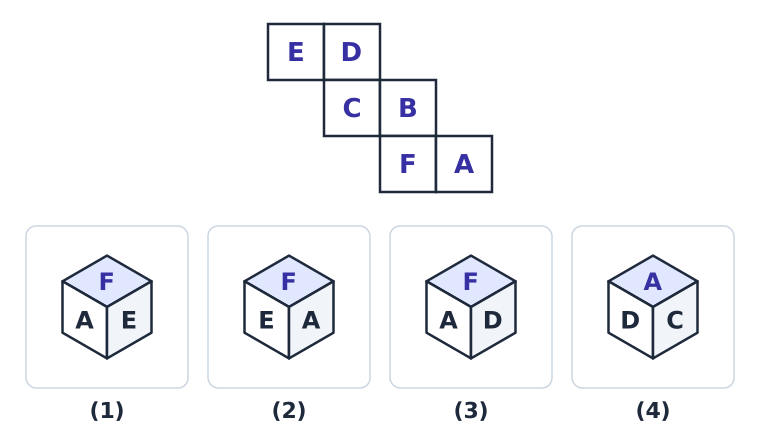
advanced
A1
B2
C3
D4
Show answer
Answer: 2
Why:
When folded, the opposite pairs are E–B, D–F, C–A. Two of the wrong cubes show an opposite pair side by side, which is impossible. Another has the right three faces but in the mirror order around the corner. Only cube (2) can be made.
Q55
The net is folded to form a cube. Which answer figure shows a cube that can be formed from it?
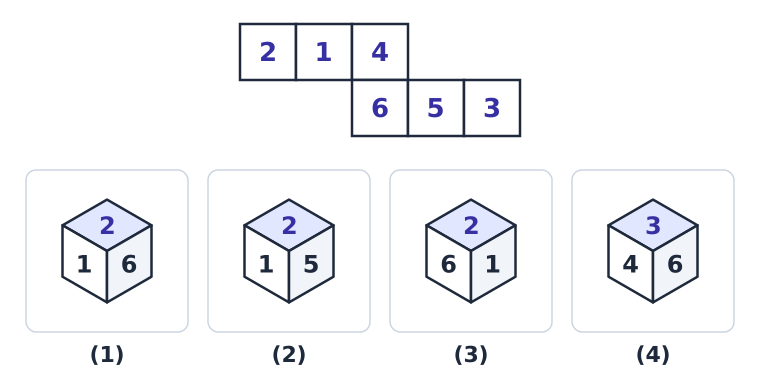
intermediate
A1
B2
C3
D4
Show answer
Answer: 3
Why:
When folded, the opposite pairs are 2–4, 1–5, 6–3. Two of the wrong cubes show an opposite pair side by side, which is impossible. Another has the right three faces but in the mirror order around the corner. Only cube (3) can be made.
Q56
The net is folded to form a cube. Which answer figure shows a cube that can be formed from it?
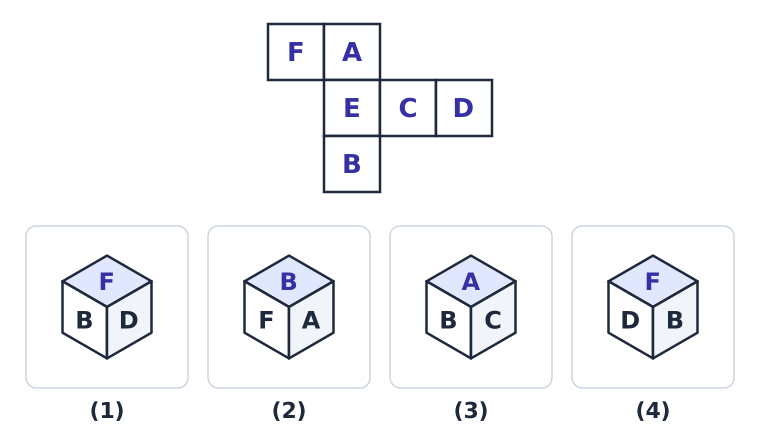
advanced
A1
B2
C3
D4
Show answer
Answer: 4
Why:
When folded, the opposite pairs are F–C, A–B, E–D. Two of the wrong cubes show an opposite pair side by side, which is impossible. Another has the right three faces but in the mirror order around the corner. Only cube (4) can be made.
Q57
The net is folded to form a cube. Which answer figure shows a cube that can be formed from it?
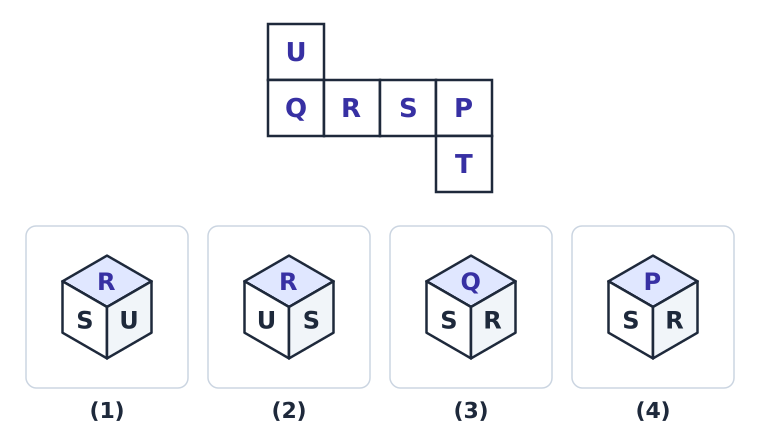
beginner
A1
B2
C3
D4
Show answer
Answer: 1
Why:
When folded, the opposite pairs are U–T, Q–S, R–P. Two of the wrong cubes show an opposite pair side by side, which is impossible. Another has the right three faces but in the mirror order around the corner. Only cube (1) can be made.
Q58
On a standard die, opposite faces add up to 7. If 3 is on top and 5 is in front, which number is at the back?
beginner
A6
B4
C5
D2
Show answer
Answer: 2
Why:
The back is opposite the front: 7 − 5 = 2.
Q59
On a standard die (opposites add to 7), 1, 2 and 3 are seen on three faces meeting at a corner. What is the total of the three hidden faces?
intermediate
A15
B21
C12
D6
Show answer
Answer: 15
Why:
The hidden faces are 6, 5 and 4: 15. (All six add to 21, and 21 − 6 = 15.)
Q60
A cube is painted on all faces and cut into 125 equal cubes. How many small cubes have at least one painted face?
intermediate
A117
B98
C27
D54
Show answer
Answer: 98
Why:
n = 5: all 125 except the hidden $(5-2)^3=27$, so 125 − 27 = 98.
Q61
Assertion (A): In a painted 4 × 4 × 4 cube cut into unit cubes, 24 cubes have exactly two painted faces.
Reason (R): Each of the 12 edges has 4 − 2 = 2 such cubes.
intermediate
ABoth A and R are true, and R is the correct explanation of A
BBoth A and R are true, but R is not the correct explanation of A
CA is true but R is false
DA is false but R is true
Show answer
Answer: Both A and R are true, and R is the correct explanation of A
Why:
12 × 2 = 24, and R is exactly the reason.
Q62
Assertion (A): Two faces of a die that are seen together in one position can be opposite faces.
Reason (R): A die has three pairs of opposite faces.
beginner
ABoth A and R are true, and R is the correct explanation of A
BBoth A and R are true, but R is not the correct explanation of A
CA is true but R is false
DA is false but R is true
Show answer
Answer: A is false but R is true
Why:
R is true, but faces seen together touch each other, so they can never be opposite. A is false.
Q63
About painted cubes, which statements are true?
1. A painted 3 × 3 × 3 cube cut into unit cubes has exactly 1 cube with no painted face.
2. In any painted cube cut this way, 8 cubes have three painted faces.
beginner
A1 only
B2 only
CBoth 1 and 2
DNeither 1 nor 2
Show answer
Answer: Both 1 and 2
Why:
$(3-2)^3=1$, and the 8 corners always have three painted faces (for n ≥ 2). Both true.
Q64
About nets and dice, which statements are true?
1. Two squares that share an edge in a net become opposite faces.
2. On every die, opposite faces add up to 7.
intermediate
A1 only
B2 only
CBoth 1 and 2
DNeither 1 nor 2
Show answer
Answer: Neither 1 nor 2
Why:
Squares sharing an edge become neighbours, and only a standard die adds to 7. Neither is true.
Important short questions (3)
Why do exactly 8 small cubes always have three painted faces?
Only a corner cube touches three outer faces, and a cube has 8 corners.
Explain how to find the face opposite X from several positions of a die.
Every face shown with X touches X, so it is a neighbour. Collect X's neighbours from all positions; when four are known, the one remaining face is opposite X.
A painted cube is cut into 216 equal cubes. How many have exactly one painted face?
n = 6, so $6(6-2)^2=96$.
Long answer questions (1)
A cube of side 5 cm is painted on all faces and cut into 1 cm cubes. Find the number of cubes with 3, 2, 1 and 0 painted faces and check your answer.
n = 5. Three faces: 8 corners. Two faces: $12(5-2)=36$. One face: $6(5-2)^2=54$. None: $(5-2)^3=27$.
Check: 8 + 36 + 54 + 27 = 125 = $5^3$.
Flashcards (12)
Cubes with 3 painted faces in any painted cube?
8
Cubes with 2 painted faces (n × n × n)?
12(n − 2)
Cubes with 1 painted face?
6(n − 2)²
Cubes with no painted face?
(n − 2)³
n = 3: no painted face?
1
Least cuts for 27 cubes?
6
Standard die: opposite of 2?
5
Can two faces seen together be opposite?
No
How many neighbours does a face have?
4
Net, straight row: which squares are opposite?
1st and 3rd (skip one)
How many different cube nets exist?
11
Cube option with an opposite pair side by side?
Impossible
Play this topic
Cube facts
Veda Skills Logical Reasoning Unit 18 — frequently asked questions
Why should you follow one element at a time in a figure series?
Each element changes by its own rule. Mixing them hides the rules; separating them makes each rule a simple step count.
How many degrees is one place of an arrow's turn, and why?
45°, because 8 equal places make a full turn of 360°.
How do you find the odd figure when three figures are turns of one figure?
Turn each figure in your mind to match one part of the others. The one that never matches is a mirror image (or otherwise changed), and that is the odd one.
Why is it safest to count triangles by size?
Each triangle has exactly one size, so grouping by size counts every triangle once and makes it easy to check that no group is forgotten.
Give the number of squares in a 5 × 5 grid and show the working.
$25+16+9+4+1=55$.
Explain why a triangle with L lines from its top corner (sides included) contains $^LC_2$ triangles.
Every triangle uses the top corner and the base; it is fixed by choosing its two side lines from the L lines, which can be done in $^LC_2$ ways.
Why do exactly 8 small cubes always have three painted faces?
Only a corner cube touches three outer faces, and a cube has 8 corners.
Explain how to find the face opposite X from several positions of a die.
Every face shown with X touches X, so it is a neighbour. Collect X's neighbours from all positions; when four are known, the one remaining face is opposite X.
A painted cube is cut into 216 equal cubes. How many have exactly one painted face?
Everything above is on this page to read. In the Veda app the same chapter
becomes spaced-repetition flashcards, timed tests that mark themselves,
Veda Bites you can swipe, and games — with your progress tracked topic by
topic.